Tom Jones Finds Wit and Reflection in Tower of Song on The Voice UK
Tom Jones turns to Leonard Cohen’s Tower of Song on The Voice UK, offering a reflective performance within a program more often centered on new singers. The coach becomes the artist being heard, giving the audience another view of his musical identity. The song keeps the attention close to words, tone, and the pace of a complete interpretation.
Cohen’s writing approaches the musician’s life through humor as well as reflection. That mixture gives an experienced performer several qualities to carry without requiring a constant increase in vocal intensity. The lyric benefits from space, allowing its thought to unfold through individual phrases rather than being pushed toward the same dramatic effect throughout.
Jones’s recognizable strength remains present, but the delivery also relies on restraint. The words have time to register within a measured line, making vocal weight useful at a relatively direct scale. The performance allows the sound to support the meaning rather than asking the lyric to provide a frame for uninterrupted power.
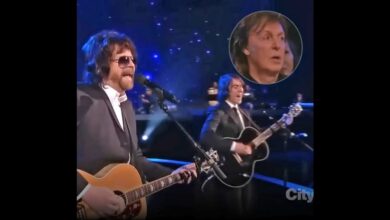
The other coaches’ reactions become part of the recording’s atmosphere. The camera shows them listening as well as showing Jones singing, preserving the reception within the room. Those responses add context to the performance while the actual phrasing and words remain the strongest basis for hearing what it communicates.
The shift from coach to performer gives the appearance another interest. An established singer known on the program for responding to contestants now demonstrates his own approach to material. The audience can hear his choices directly, following how a familiar voice meets the pace and perspective of Cohen’s composition.
Watch the performance
Tower of Song has room to develop without continual acceleration. Its steady movement makes small changes of emphasis significant, allowing tone to affect the direction of a phrase. The performance can therefore find variety through delivery and thought, with a relatively consistent musical scale keeping the listener near the lyric.
The lower part of Jones’s voice gives the reading a firm foundation. That recognizable sound supplies presence while leaving room for the words to do their work. The listener hears an individual performer addressing the song, with vocal character becoming one part of how the composition reaches the audience.
Experience adds resonance without needing the performance to function as a literal biography. A voice can bring its own history of sound and use to a lyric about musical life, while the song remains Cohen’s distinct writing. The relationship between the two gives the interpretation a particular character without requiring a spoken explanation of every connection.
Pauses and phrase endings are useful points of attention. The space around a line can allow seriousness and wit to remain together, giving its thought a moment to settle. Those smaller decisions help preserve the writing’s range, allowing humor to sit within reflection rather than being separated into another kind of performance.
The surrounding television format makes the change of atmosphere noticeable. Bright production and competition provide the program’s familiar frame, while this song asks for a quieter form of listening. The contrast gives the measured delivery a clear place within the show, directing attention toward a different kind of musical communication.
Jones retains an identifiable vocal personality within Cohen’s pace. That balance makes the reading his own while leaving the composition’s reflective character intact. Familiarity with the singer supplies an entry into the song, and the writing gives his voice another set of words and musical choices to inhabit.
The reaction shots are best understood alongside that interpretation. Seeing emotion can establish that the performance affects people in the room, but hearing the full line provides more of its context. The complete recording keeps response and music together, allowing neither to replace the other in the experience.
Economy makes the smaller expressive choices matter. A directly delivered phrase can carry substantial weight when it is given space, and the contrast with more elaborate singing becomes part of the effect. The performance invites attention to emphasis and timing as resources in their own right.
The arrangement provides a clear frame for the voice. Its supporting role helps keep the relationship between sound and language near the center, allowing the song to communicate at an intimate scale. The lyric remains easy to follow as a sequence of thoughts rather than becoming obscured within a crowded musical setting.
The writing leaves room for a performer to bring experience without explaining an entire career. Humor and reflection can emerge through the handling of a single line, giving the recognizable voice a purpose within the composition. Jones directs his strength toward that relationship, allowing measured choices to carry the performance’s feeling.
The complete Tower of Song rewards attention to its quieter phrases as well as its vocal presence. Jones gives the piece a reading shaped by tone, pauses, and continuity, making the performance more than one forceful moment. Following it from beginning to end keeps the lyric’s changing shades within the same thoughtful frame.
More performances to enjoy
The U.S. Air Force Band’s Singing Sergeants provide another route into Cohen’s writing through Hallelujah. Their vocal ensemble arrangement changes the scale, placing solo lines within a larger blend and offering a companion to the focus on one featured voice in Jones’s performance.
Alexandra Burke’s Hallelujah on The X Factor gives another Cohen composition a television setting. Its different song, occasion, and vocal approach make a useful contrast, allowing listeners to explore how familiar writing takes shape through another performer and another musical frame.