Tabea Bös and Jonas Wolf Recast “Stayin’ Alive” as a Madrigal
Tabea Bös and Jonas Wolf perform the Bee Gees’ ‘Stayin’ Alive’ in a modern Renaissance-style musical setup. Interweaving vocal parts replace the recognisable disco setting, giving the melody a separate musical framework while keeping its recognisable movement inside the recorded performance.
Jonasquin’s official December 2025 upload credits Jonas Wolf with the musical setup and names both singers. Valentin Bös receives the audio mixing and mastering credit, establishing the piece as a contemporary recorded production instead of a rediscovered historical performance.
The footage’s playful sixteenth-century premise describes the musical setup’s style. ‘Stayin’ Alive’ remains the song written by Barry, Maurice and Robin Gibb, with the older musical language supplied by the new setting instead of by a claim about its actual composition date.
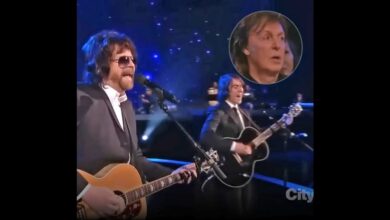
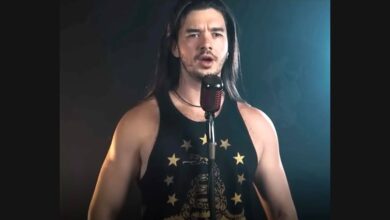
The accompanying image places the singers alongside the musical setup’s notation. That combination introduces the relationship between written parts and recorded voices, while the continuous video offers the changing musical exchanges that a single image cannot convey on its own.
The Jonasquin recording is the primary performance. Its credited singers and musical setup keep the production’s identity clear, letting the recognisable tune and newly constructed vocal setting to be heard together without confusing the stylistic premise with historical evidence.
Watch the performance
A vocal musical setup can distribute a melody across several connected lines. Here the recognisable song meets parts that answer and support one another, making their movement an important element of the performance instead of a background decoration around one singer.
The change of texture also alters how the rhythm reaches the listener. The disco original’s instrumental identity is replaced by the voices’ phrasing and entrances, with the new musical setup finding its momentum through the relationship between the sung parts.
Keeping the melody recognisable brings the reinterpretation a common reference point. Listeners can follow the song through its changed presentation, hearing how an established phrase behaves when the surrounding harmony and vocal texture use a separate set of musical choices.
The footage’s layered form belongs to a produced musical setup. Its audio credits matter because they identify the work bringing the parts together, while avoiding an unsupported description of the finished video as an entirely live, single-take duet captured without production.
The contrast between recognisable material and a separate stylistic setting brings the video its specific character. The singers do more than reproduce a disco vocal over new backing; their connected parts make the musical setup’s musical relationships main to the presentation.
The notation shown with the performers offers another view of that construction. It links the filmed voices with a written musical setup, giving the visual presentation a musical purpose beyond displaying the people who participate in the recording.
Jonasquin’s Renaissance-style ‘Bridge Over Troubled Water’ recording offers a companion with Tabea Bös. It uses another song as the basis for a separate musical setup, keeping the connection in the musicians’ approach instead of treating it as another version of this performance.
The ‘Let It Be’ companion features Anna in a separate Renaissance-style setting. Its separate song and singer give the comparison a separate identity, making the shared arranging idea clearer without collapsing several recordings into the same musical occasion.
Together, those companions show how an arranging approach can travel between songs. Each retains its own melody and participants, while the treatment of the voices offers a common musical thread across the otherwise separate recorded productions.
This ‘Stayin’ Alive’ musical setup remains a contemporary reinterpretation of a twentieth-century song. Its historical flavour belongs to the chosen musical language, with the published credits grounding the actual performance in the work of the named singers and production team.
The primary video retains Bös and Wolf’s connected vocal parts through the complete musical setup. The original song stays audible inside its changed setting, while the companions extend the comparison through other melodies and separately identified recordings.
More videos to explore
For a companion recording, Jonasquin presents “Bridge over Troubled Water but it’s a Renaissance Madrigal | Feat. Tabea Bös.” This separate video offers another setting for comparison, with its own performers, musical setup and occasion.
For a companion recording, Jonasquin presents “Let It Be (a Renaissance Madrigal) | Feat. Anna Petrtylová.” This separate video offers another setting for comparison, with its own performers, musical setup and occasion.
This Renaissance-style vocal production adds context to the musical record. Further reading: Performance background and source. https://www.youtube.com/watch?v=3zGf7_YL70M