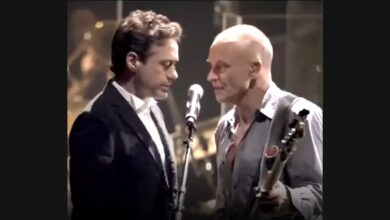
Josh Groban and Kelly Clarkson Share ‘All I Ask of You’ on Stages Live
Josh Groban and Kelly Clarkson perform “All I Ask of You,” the duet from Andrew Lloyd Webber’s “The Phantom of the Opera,” in a Stages Live concert. The pairing brings Groban’s musical-theater delivery together with Clarkson’s pop vocal style, using a familiar stage song as common ground.
Groban introduces Clarkson as his partner for the number, setting up the exchange between their voices. The song depends on two singers sharing its melodic story, so the collaboration is central to the arrangement rather than an added feature around it.
Both artists have spoken about wanting to sing the song, and their performance gives that choice a direct musical form. The piece comes from a well-known musical, but the duet can be followed without knowing the full plot. Its alternating lines and shared passages make the relationship between the singers clear.
The staging draws on the theatrical world associated with “The Phantom of the Opera.” Lighting and set details frame the singers, while the concert remains focused on their delivery. The presentation gives the number a musical-theater atmosphere without asking viewers to follow a complete production of the show.
Groban and Clarkson have different vocal colors, and the arrangement allows both to remain distinct. Groban’s resonant tenor gives the opening lines a broad sound; Clarkson answers with a brighter, more forceful edge. Their contrast adds definition to the duet’s dialogue.
Watch the performance
The song’s emotional movement depends on how one voice responds to the other. Groban and Clarkson keep the exchanges connected, then meet in the passages where the melody brings them together. That structure makes the lyrics feel like a conversation rather than two separate solo turns.
The pairing also bridges musical-theater repertoire and pop audiences. The song’s familiar melody is already associated with the stage, while the performers bring the vocal identities their listeners know. The arrangement holds those influences together without changing the composition’s basic shape.
As the duet develops, the voices move from individual lines toward a fuller shared sound. That progression follows the composition and gives the performance a clear arc. The singers’ timing matters because each entrance needs to feel like part of the same musical exchange.
The performers’ stage presence helps the audience follow that exchange. Groban establishes the number, and Clarkson’s entrance changes its vocal texture. Their attention stays on the song and on one another, keeping the concert presentation grounded in the music.
The orchestra provides a broad foundation for the duet. Its arrangement supports the singers and preserves the sense of scale associated with the musical, while leaving the vocal lines prominent. The instrumental backing connects the separate phrases into one continuous performance.
Groban’s background includes a long association with theatrical and classical-crossover repertoire. That experience suits a song written for a musical, where the vocal line needs to communicate character as well as melody. Here, he uses a controlled, resonant delivery to establish the duet’s tone.
Clarkson is known for moving among pop styles, and this number gives her a chance to work within musical-theater writing. Her vocal strength brings another kind of energy to the song, while the melodic structure keeps the performance connected to its stage origins.
Their collaboration is engaging because the two voices bring different strengths to the same material. The song gives them a shared structure, and the arrangement lets their contrasts remain audible. The result respects the original while offering a concert interpretation shaped by both performers.
“All I Ask of You” is more than a showcase for two singers; its lines are written to develop together. Groban and Clarkson preserve that relationship through the alternating phrases and shared passages. The performance’s warmth comes from hearing the complete exchange take shape.
Following the full performance makes the duet’s organization clearer. One singer can introduce an idea, another can answer, and the later shared sections gather those parts together. Groban and Clarkson keep their individual tones recognizable while supporting one connected musical story.
The Stages Live version offers a welcoming entry point for viewers who know “The Phantom of the Opera” and those discovering its songs. The orchestral frame, contrasting voices and clear melodic exchange make the number accessible as both a theater song and a live duet. Groban’s introduction also gives the performance a conversational beginning before the composition settles into its romantic exchange, connecting the concert setting with the story carried by the music. It gives the duet time to establish its distinct voices before the shared sections arrive, and the full arrangement keeps that exchange easy to follow.
More performances to enjoy
Groban performs “You Raise Me Up” live in Hyde Park. The choir, orchestra and audience provide another example of his lead voice within a larger musical partnership.
Groban and Céline Dion perform “The Prayer” live. Their differing vocal colors offer another example of two singers sharing the direction of a familiar duet.