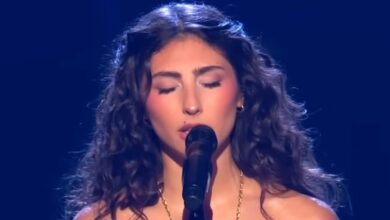
Celine Dion Returns to All By Myself Before Her Paris Audience
All By Myself takes on a particular setting during Celine Dion’s return to full-length concerts in Paris. The familiar ballad already carries a history within her repertoire, and this performance places it before an audience meeting her on stage again after a long absence. The song and the occasion work together, giving listeners both recognized music and a new concert moment to follow.
The Paris engagement, announced through Dion’s official channels for September and October 2026, provides the setting for that return. Fans arrive with memories of earlier performances as well as anticipation for the present one. The recording belongs to that specific concert chapter, allowing its atmosphere to be understood without treating the event as interchangeable with an older rendition.
The complete song offers more than the expectation of its best-known climactic passage. Its opening, development, and changes of intensity give that moment a place within a larger structure. Hearing the full sequence keeps the emphasis on a performance unfolding over time, with the room’s attention adding context to the familiar musical progression.
A measured beginning gives the melody a relatively intimate scale. The lines establish the song’s reflective atmosphere before the arrangement broadens, creating space for a later increase in intensity. That contrast helps the ballad retain direction, allowing its larger phrases to emerge as developments of the opening rather than as isolated vocal events.
The climactic section is an unmistakable part of the song’s identity in Dion’s repertoire. In this setting, its arrival is also heard within the anticipation surrounding her return. The full performance allows both aspects to remain clear: a familiar musical peak belongs to the ballad, while the present audience supplies the circumstances in which it is received.
Watch the performance
Listening closely to phrasing and pace gives a fuller view than reducing the performance to a test of one passage. The song carries a line across several minutes, and its musical choices can be followed throughout. The occasion explains some of the atmosphere, but it does not replace the details that make this an individual interpretation.
The melody moves between private reflection and a more open declaration. Connecting those scales is central to the song’s shape, with the quieter material giving a point of reference for the stronger sections. Hearing that relationship makes the expansion feel like movement within one ballad, preserving an emotional thread across changes in volume and texture.
The audience’s attention is part of the live frame. A concentrated room can make an exposed phrase feel different from its studio counterpart, because listeners are present as the line develops. Moments of quiet have their own place alongside applause, giving the recording a sense of shared time around the performance.
That shared time is one of the defining qualities of a concert video. The song unfolds before the audience rather than arriving only as a finished recording, and responses become part of its surroundings. Later viewers can follow the same sequence, hearing the music alongside the atmosphere of the room where this particular rendition takes place.
The familiar ballad also becomes a point of reconnection. Performer and audience already know its shape, so recognition can support the encounter without needing a new song to explain it. The performance gives that established repertoire a current setting, allowing music associated with earlier years to participate in a renewed live meeting.
Individual listeners will bring different histories to the song. Some may remember earlier recordings or concerts, while others encounter this version with less background. The melody can accommodate those different points of entry, remaining recognizable while the current performance offers a distinct event rather than simply repeating someone else’s memory.
The quieter sections are essential to that event’s musical arc. They supply the setting from which the later release develops, giving the ballad more than one expressive scale. Skipping directly to a highlight can obscure the relationship, while hearing the complete song allows the change in intensity to register as part of its direction.
Following that development also puts the audience response in context. The larger passages arrive after a period of listening and anticipation, so the reaction belongs to a sequence rather than appearing on its own. The recording preserves how song and room move together through that progression, giving the response a musical setting the full video makes clear.
The performance can be appreciated as a particular evening without making it a prediction about other concerts. It offers singing, phrasing, pacing, and an audience encounter, rather than a basis for a medical judgment. Keeping that distinction lets the interpretation and its circumstances remain the useful focus of the recording.
Within Dion’s concert history, the Paris engagement gives a signature song another occasion. An established title returns to a large audience during a new chapter of live performance, carrying familiarity into the present. That setting allows earlier associations to enrich the listening while leaving room for this rendition to have its own atmosphere.
The Paris All By Myself recording combines a known musical structure with a renewed meeting between singer and audience. Its measured opening, expanding arrangement, and reception all contribute to the experience. Watching the complete sequence preserves those relationships, allowing the song’s familiar progression and the particular concert occasion to remain part of the same performance.
More performances to enjoy
Dion’s The Prayer with Josh Groban offers a companion centered on shared phrasing and contrasting voices. The duet changes the musical relationship around her lead, providing another way to follow the movement between restrained passages and a broader sound within a familiar ballad.
Her 2008 Something performance with Joe Walsh supplies a further comparison through voice and guitar. The partnership gives another well-known composition a different instrumental frame, offering listeners an opportunity to hear how collaboration and arrangement influence the atmosphere around Dion’s singing.