What a Close-Up of Layla Clark’s Hands Reveals About the Jaguars’ Halftime Show
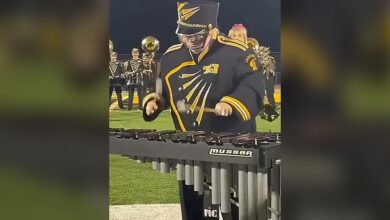
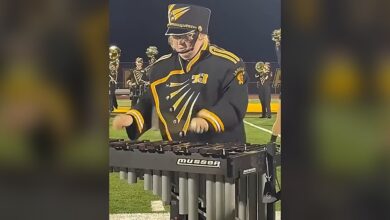
At the start of the Jaguars’ halftime clip, the whole band is still to come. The camera leaves viewers with Layla Clark, a pair of mallets and a few bars of a familiar tune.
There’s tape on her fingers. It’s easy to miss while the opening of “Thunderstruck” is taking shape, especially if you’re trying to work out where you’ve heard those notes before.
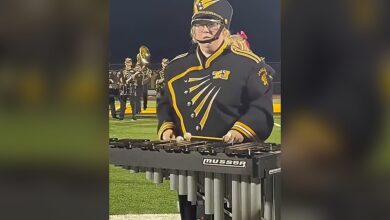
Clark plays mallet percussion for Thomas Jefferson High School. On the football field, she gets the opening to herself before her bandmates have their turn.
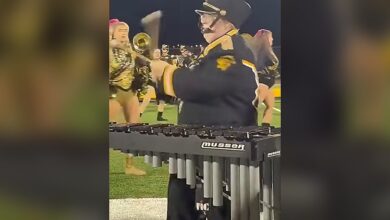
The video is unusually good at showing the work behind that handoff. A quick change of direction in the mallets produces a note right where the ear expects it.
The other Jaguars change the scale of the sound when they join. The tune Clark started is still easy to pick out underneath the full arrangement.
The close-up has given people something specific to notice on a replay. The wider sound gives them a reason to keep listening after that first detail.
One reason the detail escaped some viewers the first time is that the ear gets to the song before the eye gets to the grip. People hear the familiar outline of “Thunderstruck” and start waiting for what comes next. Replay the opening and there is time to follow the tape, the bars and the movement from one note to the next.
The field is a useful setting for that contrast. In the first view, the work is measured in the space between two bars. A few seconds later, the arrangement has to reach people across the stands. The Jaguars get from the small movement to the big sound without breaking the pulse.
The footage came from the previous football season, according to Axios Pittsburgh. Clark was a senior when it started circulating again. People who came across it outside Pennsylvania were seeing the end product of work that began well before any of them heard the recording.
A very different arrangement makes the same riff immediately recognizable on bowed strings.
The camera shows Clark playing with tape on her fingers. It leaves the reason for the tape unanswered. The visible point is how she holds and redirects the mallets. The audible point is that the rhythm stays in place through those changes.
The 2CELLOS recording is another way to hear what the original riff can do away from a guitar. In Clark’s version, though, the audience also gets the particular satisfaction of watching a school band build the rest of the number around a student’s opening.