Brian May and Andrea Bocelli Meet Inside the Emotion of ‘Who Wants to Live Forever’
Brian May’s collaboration with Andrea Bocelli on “Who Wants to Live Forever” places the composer beside a singer from a different musical world. Recorded at Teatro del Silenzio in Tuscany in 2024, the performance brings Queen’s dramatic ballad into Bocelli’s anniversary celebration. May’s voice and guitar give it a direct connection to its origins, while Bocelli’s tenor changes the scale and color of its long melodic lines.
The setting was Andrea Bocelli 30: The Celebration, the series of concerts marking three decades of Bocelli’s recording career. The open-air Tuscan venue is closely associated with the singer. The official performance video, released through Bocelli’s channel in 2025, preserves this meeting within the larger anniversary event.
May wrote “Who Wants to Live Forever” for the world of Highlander, and Queen included it on A Kind of Magic in 1986. The song’s questions about time, love, and loss help explain why it can travel between styles. Its melody offers room for both a quiet, intimate opening and a much larger emotional release.
May’s contribution is especially personal because the composition is his own. His softer vocal character gives the song a human, conversational quality before the performance moves toward broader phrases. The recognizable guitar sound adds another link to Queen without requiring the arrangement to recreate an earlier recording.
Bocelli approaches the melody with the sustained tone and shaped phrases of his classical crossover work. Beside May, that gives the duet two different textures. The contrast is part of its appeal: the composer’s direct delivery meets a tenor capable of carrying a line with a very different kind of resonance.
Freddie Mercury’s interpretation remains inseparable from the song’s history. This collaboration acknowledges that history through the composition itself while allowing May and Bocelli to sing in their own voices. In the official recording below, the interest is in the exchange between those voices and the orchestral setting around them.
The performance’s emotional shape depends on changes of scale. A quieter phrase can draw attention to the words, while a larger sustained passage opens the music outward. May and Bocelli do not need identical vocal colors for the duet to work; their different approaches make the song’s movement easier to hear.
Queen’s 1986 Budapest performance supplies an earlier live perspective on the same composition. Mercury leads a concert rendition made during the original band’s Magic Tour, with May present as both writer and guitarist. That footage places the Tuscan collaboration beside the song’s own performance history.
The Budapest recording and the Teatro del Silenzio duet come from different decades and different musical settings. Comparing them need not be a contest between singers. It shows how the melody holds its identity while the balance of voice, guitar, and accompaniment changes.
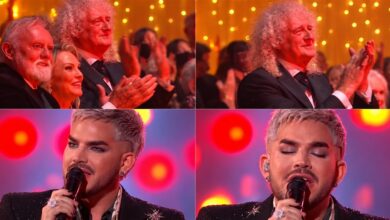
Adam Lambert’s tribute at the 2025 Polar Music Prize offers another distinct setting. With Queen being honored and May and Roger Taylor among the attendees, Lambert sings the ballad as part of the ceremony. His interpretation adds a further chapter to the song’s life beyond its first recording.
What makes the Bocelli collaboration memorable is the presence of the songwriter inside that continuing story. May can bring the song back to its emotional starting point even as a new voice expands its reach. The Tuscan performance shows how much room a well-built ballad can leave for another musician’s phrasing, tone, and feeling.