Stealers Wheel’s “Stuck In The Middle With You” And The Art Of Smiling Through The Awkwardness
Stealers Wheel’s “Stuck In The Middle With You” has a rare kind of immortality: it’s catchy enough to feel like pure fun, sharp enough to feel like commentary, and odd enough to feel like it came from a very specific moment in music history. On the surface it’s a breezy, singable groove with a grin in its rhythm, but the lyric is basically a social panic attack with perfect timing. The narrator isn’t daydreaming; he’s trapped. He’s stuck at some awkward table, surrounded by people performing friendliness, smiling too hard, talking too loud, and using him as decoration. The genius is that the song doesn’t sulk about it. It dances right through the discomfort, turning anxiety into a hook you can whistle.
The band behind that hook, Stealers Wheel, always carried an interesting tension: they had the polish and melody to compete with radio heavyweights, but their best-known hit also sounded like it was side-eyeing the whole industry machine. “Clowns to the left of me, jokers to the right” is funny because it’s relatable, but it’s also a little brave. It’s a pop chorus that openly admits, “I don’t like the room I’m in,” while still keeping the beat moving like nothing’s wrong. That contrast is why the song keeps popping up in people’s lives decades later. It’s the musical version of smiling through a situation you can’t escape yet, and that feeling never goes out of style.
Musically, it’s a perfect piece of early-’70s craft: a lightly rolling rhythm section, a guitar part that stays friendly rather than flashy, and vocal phrasing that feels conversational even when it’s tightly controlled. There’s also something knowingly “Dylan-ish” about the vocal tone and the way the story unfolds, like a narrator thinking out loud in real time. But Stealers Wheel don’t turn it into imitation. They make it pop, and that pop sheen matters because it creates the illusion that everything is fine. The listener gets to enjoy the groove while the lyric quietly escalates into paranoia. The song turns awkwardness into a party, and that’s not easy to pull off without sounding forced.
Part of the fun is how cinematic it feels without trying to be cinematic. You can see the scene immediately: the room, the chatter, the forced laughter, the sense that you’re being watched, judged, and slightly used. Then the chorus hits and it’s like the narrator snaps into a more honest voice, the one he can’t say out loud to anyone in the room. That push-pull between public face and private panic is the song’s secret engine. It’s not simply a catchy tune from the 1970s; it’s a character piece. That’s why it survives outside its era, because it plays like a tiny short film set to an irresistible beat.
The performance history adds another layer, because “Stuck In The Middle With You” changes depending on who’s singing it and when. In its original moment, it’s a sly shot across the bow of music-business glad-handing, but it’s also a young band’s big swing at a hit. Later, it becomes something else: a classic-rock staple with a wink, a nostalgia trigger, and for many listeners, a song forever linked to pop culture moments that made it feel darker than its melody suggests. That flexibility is part of its power. The song can be played at a barbecue, in a bar, in a film scene, or on a late-night drive, and it still makes emotional sense.
What really separates a standout live or TV performance from the studio cut is how the band sells the contradiction. The best versions lean into the cheerfulness of the groove while letting the lyric land with just enough bite. You don’t want it to become angry; the brilliance is that it’s polite and panicked at once. That’s where delivery matters: the way the singer shapes the words “so scared,” the tiny pauses before a line lands, the slightly exaggerated grin you can hear in the voice. A performance that gets this right makes you feel like you’re inside the situation, laughing because it’s absurd, and sweating because it’s true.
A great early television-era performance also highlights the song’s deceptively tight arrangement. The rhythm has to be locked, because the whole track rides on that steady forward roll. The guitars can’t crowd the vocal, because the lyric is the hook’s emotional punchline. And the band has to project confidence even if the song’s narrator is unraveling. That’s why this song is such a good test of live chemistry: it demands precision without sounding stiff. When it works, it feels effortless, like the band is just strolling through a masterpiece that happens to be doing complicated emotional work underneath.
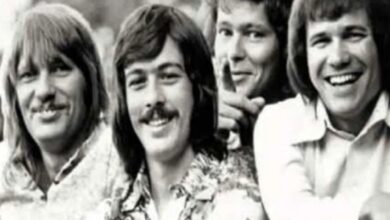
It also helps that Stealers Wheel’s story carries a bit of bittersweet context. The band’s lineup shifts and short lifespan make the hit feel like a lightning strike—one of those moments where the world briefly lines up with the exact right song, the exact right sound, the exact right mood. That sense of “this shouldn’t be so perfect, but it is” makes the classic performances more compelling. You’re not just watching a band play a hit; you’re watching a moment when everything clicked. And with “Stuck In The Middle With You,” the click is audible: the groove, the sarcasm, the charm, and the nervous energy all arriving at the same time.
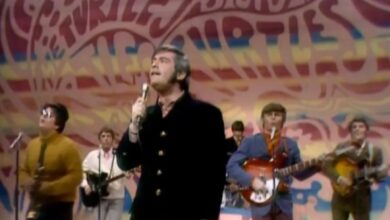
The Top of the Pops-era performance is a snapshot of the song as a living, breathing pop event rather than a piece of nostalgia. It’s the kind of TV moment where you can practically feel the song traveling outward—into bedrooms, into cars, into weekend parties—turning into a phrase people quote without thinking. The performance energy isn’t about spectacle; it’s about presence. You can hear how the vocal sits right on the beat, how the band keeps everything crisp, and how the tune’s cheerful swing makes the lyric’s discomfort even funnier. This version feels different because it’s the song in its original habitat: a hit doing hit things in real time.
Once you’ve felt the live/TV energy, the studio recording becomes even more interesting because it’s all about control. The original cut is clean, bright, and tightly framed, like a perfectly composed photograph. Every element is there to serve the hook: the rhythm that never wobbles, the guitar lines that stay friendly, the vocal that sounds casual while being meticulously placed. The lyric’s anxiety doesn’t explode; it simmers. That simmer is what made it so replayable on radio and what still makes it addictive now. The studio version is the blueprint—this is where the song’s smirk is calibrated so precisely that you can dance to it while realizing, a second later, that the narrator is quietly losing it.
One of the best ways to understand what makes Stealers Wheel’s version special is to hear the song reinterpreted by a completely different kind of performer. A strong cover doesn’t just copy the groove; it reveals what’s hiding in the structure. When a blues-rock player takes it on live, the song’s tension becomes more obvious: the lyric feels more desperate, the guitar work can sharpen the edges, and the “fun” surface starts to look like a mask. That contrast is useful because it shows how balanced the original really was. Stealers Wheel made the discomfort danceable. A heavier live cover often makes the discomfort the headline, and suddenly you realize how much restraint the original had.
It’s also impossible to separate the song from the broader creative orbit it came from, especially when you look at what Gerry Rafferty did after Stealers Wheel. Hearing Rafferty in his later solo work is like seeing the same storyteller in a different lighting: more spacious, more reflective, and more openly emotional. Where “Stuck In The Middle With You” hides its unease inside a jaunty groove, Rafferty’s later classics tend to let longing and restlessness breathe. Putting these side by side helps explain why Stealers Wheel weren’t just a novelty act with one hook. There was real songwriting muscle at the center, the kind that could build sing-along choruses and also build moods that feel like whole environments.
Another useful comparison is the way other 1970s hits used humor and swagger to carry something slightly sharper underneath. There’s a whole lane of classic rock that sounds relaxed but is actually doing very deliberate character work—songs that feel like a grin, a shrug, a persona stepping into the spotlight. That’s where “Stuck In The Middle With You” lives: it’s playful, but it’s also pointed. Hearing another era-defining hit with an equally effortless groove shows how hard “effortless” actually is. The best records of that time made you feel like the band was simply having fun, even when the songwriting was laser-focused and the performance had to be nailed.
What keeps bringing people back to Stealers Wheel’s original isn’t only nostalgia. It’s the way the song captures a universal social sensation: being stuck somewhere you don’t belong, smiling because you have to, and feeling your thoughts spiral while everyone else seems comfortable. That’s a modern feeling, even if the record is decades old. The chorus is basically a meme before memes existed, but it’s also a coping mechanism. It turns discomfort into something communal—something you can sing with friends, which makes the discomfort smaller. That’s why the song still thrives at parties and in playlists: it gives you a way to laugh at the exact moment you might otherwise grit your teeth.
And the “version difference” isn’t just about tempo or instruments; it’s about perspective. In a tight TV performance, the song feels like a hit in motion, confident and bright. In the studio recording, it feels like a perfectly designed object, a pop machine that hides anxiety in plain sight. In a bluesier live cover, the song feels more like the narrator is truly cornered, and the humor becomes darker. Next to Rafferty’s later work, it feels like a clever early chapter from writers who had more depth than the one big chorus. The song can wear all those faces because the core idea is strong, and the melody is strong enough to carry different emotional temperatures without collapsing.
Stealers Wheel’s “Stuck In The Middle With You” also has that rare gift of making people feel included the first time they hear it. You don’t need context to sing the chorus. You don’t need to know the band’s history to understand the lyric’s basic problem. And you don’t need to be a classic rock superfan to feel the groove land in your body. That accessibility is why it’s survived shifts in taste, technology, and attention spans. It’s short, it’s direct, it’s funny, and it’s oddly comforting. Even when the narrator is sweating through the situation, the song reassures you that you’re not alone in that feeling.
Finally, there’s something satisfying about how the track refuses to pick one mood. It’s not fully cynical, not fully innocent, not fully angry, not fully joyful. It lives in the messy middle, exactly where most real social experiences happen. That’s why it continues to feel fresh: it doesn’t preach, it doesn’t moralize, it doesn’t insist on one interpretation. It just tells you what it feels like to be surrounded by noise, trying to keep your balance, and hoping you don’t embarrass yourself before you can find an exit. Then it hands you a chorus you can shout like a victory, even if you’re still stuck in the room.