The Archies’ “Sugar, Sugar” (1969) And The Bubblegum Pop Moment That Conquered The World
The Archies’ “Sugar, Sugar” is one of those pop miracles that feels too perfectly engineered to be real—and in a way, it wasn’t. In 1969, it arrived wrapped in candy-colored innocence, tied to a Saturday-morning cartoon universe, and somehow still managed to steamroll the adult music world. That contrast is the first reason it remains such a fascinating story: a song sung by voices you never actually saw, attached to characters who didn’t exist outside animation cels, becoming a genuine cultural event with real chart power. It wasn’t a novelty record people laughed at once and forgot. It was a track people played obsessively, a hook that lodged itself into radios, diners, cars, school dances, and family living rooms with the confidence of something timeless.
Part of the song’s magic is how instantly it announces itself. “Sugar, ah honey honey” isn’t a lyric so much as a jingle you feel like you already know the first time you hear it, like it’s been floating in the air for years and you’re simply catching it. That’s classic bubblegum pop at its most effective: simple language, bright rhythm, and a melody built to be remembered by anyone, anywhere, with zero effort. Yet the craftsmanship underneath is real. The beat is tight but relaxed, the chords are friendly without being sleepy, and the whole arrangement is designed to move forward with a buoyant, skipping momentum. It sounds easy because it’s expertly built to feel easy.
There’s also a very specific 1969 optimism baked into “Sugar, Sugar,” the kind of sunny pop that didn’t apologize for being cheerful. This was the era when rock was expanding, getting heavier, louder, more political, and more experimental—yet a pure confection like this could still seize the crown. That tension makes its success even more interesting. “Sugar, Sugar” didn’t win because it was edgy; it won because it was irresistible. It offered a tiny vacation from the noise of the world, a two-and-a-half-minute burst of sweetness that felt safe and fun without feeling lazy. It’s the musical equivalent of neon signage: bright, direct, and impossible to ignore once it’s in your line of sight.
The fictional-band angle only deepens the legend. The Archies were characters first and a “group” second, which meant the music had to do all the heavy lifting. There were no tabloid headlines, no dramatic interviews, no mysterious frontman persona—just the sound. That forced listeners to connect to the record itself rather than the mythology around a living, touring act. Ironically, it gave the song a kind of purity: it didn’t need you to believe in a band’s lifestyle, only in the chorus. And when it worked, it worked at a scale that startled everyone, proving a cartoon concept could compete head-to-head with the biggest real artists of the moment.
What really makes “Sugar, Sugar” endure is how physical the hook feels. The groove has a bounce that practically instructs your body to move, even if it’s just tapping a foot or nodding along. The backing vocals and handclap-style rhythm cues create a communal feeling, like you’re already in a room full of people singing it. That’s why it has survived across decades of changing taste: it doesn’t demand analysis, it demands participation. You don’t listen to it the way you listen to a serious album cut. You join it. It’s music built to recruit you instantly, like a friendly chant that becomes yours after one chorus.
A great way to appreciate its staying power is to look at how it keeps resurfacing in movies, TV, commercials, and nostalgic playlists, always playing the same role: a shorthand for bright, uncomplicated joy. Plenty of old hits get preserved as “important,” but “Sugar, Sugar” gets preserved as useful. It can instantly set a scene, lighten a mood, or give a moment a playful wink. That kind of cultural function is rare. It means the song isn’t just remembered; it’s deployed. And each time it comes back, it feels strangely modern in its efficiency, like a prototype for the kind of hyper-catchy pop writing that would dominate later eras.
There’s also an emotional trick hidden in the song’s simplicity. Because the lyrics are so sweet and direct, they land like a compliment from a simpler version of the world—one where romance is a smile, not a battlefield. That’s why even people who claim they “hate cheesy songs” often soften when this one comes on. It doesn’t try to be profound. It tries to be charming, and charm is powerful. When you hear it in a room full of people, you can feel defenses lowering. The melody becomes a shared memory machine, pulling strangers into the same easy grin at the same time, as if everyone is remembering the same summer.
And that brings us to what makes a modern performance or fan-shot clip of “Sugar, Sugar” genuinely interesting. The song is so tied to a specific pop innocence that any live rendition becomes a test: can it still feel fresh without losing its sweetness? The best versions don’t try to “rock it up” too much or turn it into a joke. They lean into the craftsmanship, the bounce, the singalong quality, and they let the audience do what the song was designed to make people do—smile, move, and sing without embarrassment. When that happens, the track stops being a museum piece and becomes what it always was: a pop weapon with a velvet glove.
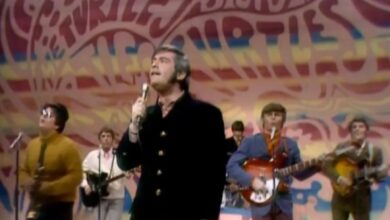
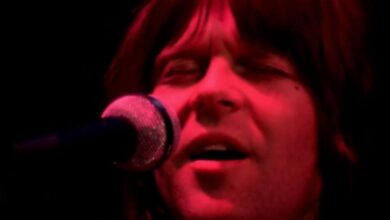
Watching a live rendition like this makes the song’s structure stand out in a new way. On record, it’s perfectly balanced: verse, chorus, little turns of melody that feel like they’re lifting you up without you noticing the mechanics. In performance, you can actually see how the rhythm does the persuading. The band locks into that friendly, elastic pulse, and suddenly the entire crowd becomes part of the arrangement—claps, cheers, that collective inhale before the chorus drops again. It’s also a reminder that “Sugar, Sugar” isn’t just a cute artifact; it’s a functional crowd-pleaser. The moment the chorus hits, the room behaves like the song has flipped a switch, proving that the hook still works the same way it did decades ago.
Going back to the official version after a live clip is like stepping from a warm, noisy room into a bright, clean cartoon world where every sound is in its perfect place. The studio take is pure bubblegum engineering: crisp, buoyant, and relentlessly melodic, with nothing extraneous cluttering the path to the chorus. It’s also where you hear the song’s tone most clearly—playful, romantic, uncomplicated, and confident in its own sweetness. The performance versions can add personality and a little grit around the edges, but the original is the blueprint for why it became unstoppable in the first place. It’s not trying to impress you with complexity; it’s trying to win you over immediately, and it does.
The more you compare versions, the more you realize “Sugar, Sugar” is basically a masterclass in making a record feel like a grin. The chord changes never fight the melody, the melody never fights the rhythm, and the rhythm never loses that skipping energy that makes the chorus feel like it’s bouncing on a trampoline. In modern pop terms, it’s almost shockingly efficient: a premise stated instantly, a chorus that arrives like a reward, and a loop of pleasure that keeps resetting before you can get tired of it. That efficiency is exactly why later generations still use it as a reference point for “perfectly catchy” songwriting. Plenty of hits age into something you “respect.” This one ages into something you still want to sing.
Putting “Sugar, Sugar” next to a different era’s singalong classic like this is where the wider bubblegum ecosystem becomes obvious. You can hear the shared DNA: bright melodies, tight runtimes, choruses designed to be shouted by people who don’t even know they’re about to shout. What changes is the attitude. Some songs lean more mischievous, some more romantic, some more teenage-secretive, but they’re all chasing the same magic trick—turning a simple line into a communal moment. This comparison also highlights why “Sugar, Sugar” is special even among its peers: it’s one of the few that feels completely weightless while still sounding impeccably constructed, like it’s floating but never drifting.
When you jump from “Sugar, Sugar” into another bubblegum staple like this, you start noticing how the genre functioned as a kind of pop playground. The lyrics are often food metaphors, secret crush confessions, playground games, or goofy flirtations—lightweight themes delivered with heavyweight catchiness. What’s fascinating is how these songs can still light up an audience decades later, because the pleasure is physical and immediate. Even if you’ve changed, even if your taste has hardened, your brain still reacts to the same patterns: the bounce, the repetition, the melodic payoff. “Sugar, Sugar” sits at the very top of that mountain because it’s so pure it almost feels like a universal pop language.
This kind of comparison also shows how performance context changes the feel of bubblegum pop. In a live setting, the “cute” factor can either collapse into kitsch or transform into something genuinely joyful and unifying, depending on how the band and audience treat it. The best performances don’t wink too hard. They play it straight enough to respect the song, but with enough warmth to make it feel like a shared party rather than a reenactment. That’s where “Sugar, Sugar” shines: it doesn’t require virtuosity, it requires spirit. When the rhythm is right and the crowd is willing, the chorus becomes a group smile you can hear.
What makes “Sugar, Sugar” especially durable is that it can survive both sincerity and irony. You can play it at full volume at a retro party and mean it completely, or you can drop it into a scene as a playful contrast, and it still lands. That’s a rare versatility. Many old pop hits either become jokes or become sacred. “Sugar, Sugar” somehow dodges both traps. It stays fun. And that fun is the secret engine behind its long life: it doesn’t ask you to prove you’re cool enough to like it. It simply invites you in. The song’s sweetness is so upfront that it becomes disarming rather than embarrassing, which is why it keeps winning people back.
There’s also a deeper cultural appeal to the idea that something “manufactured” can still be genuinely beloved. The Archies were a concept, a project, a studio creation—yet the emotional effect on listeners was real. That’s a story modern audiences understand even more now, in an era of virtual performers, animated brands, and internet-made stars. “Sugar, Sugar” was an early proof that authenticity in pop isn’t always about a band living in a van and suffering for art. Sometimes authenticity is simply the honest delivery of pleasure—giving people a melody that makes their day better and refusing to overcomplicate it. The joy is real even if the band is fictional.
If you listen closely across versions, you’ll notice that “Sugar, Sugar” lives or dies on one crucial detail: the bounce must feel effortless. Too stiff, and it sounds like a children’s jingle. Too aggressive, and it loses its charm. The perfect zone is that light, springy pocket where the song feels like it’s smiling while it moves. That’s why the best live takes tend to keep the tempo and groove faithful, letting the chorus do the heavy lifting. And it’s why the original recording still feels definitive: it hits that pocket so cleanly that every later version is, in some way, trying to recreate that exact sensation of weightless momentum.
In the end, the reason “Sugar, Sugar” remains important isn’t just that it was huge in 1969. It’s that it represents a type of pop perfection that never goes out of style: a simple idea delivered with maximum charm and minimum friction. It’s a reminder that music doesn’t always need to be complicated to be enduring, and that a great hook can become a generational handshake. When a song can still make people sing decades later—across different venues, different moods, different eras—it earns its place not as a “guilty pleasure,” but as a genuine classic. “Sugar, Sugar” keeps proving it isn’t just sweet; it’s sturdy.