The Searchers Turned Heartbreak Into Jangle-Pop Gold With “Needles and Pins”
“Needles and Pins” sits in that special corner of pop history where a song can sound breezy on the surface while quietly cutting deep underneath. The Searchers’ hit version arrived in the full-throttle moment of the British Invasion, when Liverpool groups were exporting bright guitars, tight harmonies, and a new kind of youthful urgency to the world. Yet this track never behaved like a simple singalong. It moved with a quick pulse, almost cheerful in its stride, while the lyric described a sting that wouldn’t stop—seeing someone you love with someone else, and feeling the pain land again and again. That contrast is the secret weapon: the music smiles while the story winces, and the tension between the two is exactly why it still lands decades later.
To understand why The Searchers’ recording became the one most people remember, it helps to notice how cleanly they translate emotional chaos into something crisp and playable. The arrangement is lean, all forward motion, with guitars that feel like they’re sparkling even when the lyric is sinking. Their Merseybeat attack keeps everything moving, refusing to wallow, which makes the heartbreak feel even more human. Real jealousy rarely arrives with slow-motion tragedy; it comes with a racing mind, a forced composure, and that awful moment of pretending you’re fine. The Searchers captured that emotional rhythm. You can practically hear someone trying to keep their dignity while their stomach drops, and the band’s bright precision becomes the mask.
The song’s backstory adds another layer of fascination because it crosses scenes and personalities that defined early-’60s pop. It’s credited to Jack Nitzsche and Sonny Bono, which already tells you it’s not just a random teen single tossed off in an afternoon. Nitzsche had a gift for dramatic pop craft, and Bono—before the world knew him primarily through his later stardom—was learning how to bottle emotion into direct, memorable lines. The lyric’s central image is almost physically uncomfortable: love doesn’t just hurt, it pricks, it nags, it returns. That metaphor is simple enough for radio, but vivid enough to outlive trends. It also gives singers a chance to sound wounded without sounding weak, which is why the track kept getting revived.
Before The Searchers made it a chart force, the song’s story began in the American pop ecosystem of early 1963 with Jackie DeShannon recording it first. That matters because the song’s emotional DNA is very American—confessional, conversational, direct—while The Searchers’ approach is distinctly British Invasion: sharper edges, brighter guitars, and that clipped, confident momentum. The miracle is how well those worlds meet. The Searchers didn’t “cover” it like a museum piece; they refitted it for their own engine. The result is the kind of transatlantic pop transformation that defined the era: American songwriting fed into British band energy, then got beamed back to American radio as something newly urgent.
By January 1964, The Searchers’ version was positioned perfectly to explode, and it did. It became a UK chart-topper and a major U.S. hit as well, proving they weren’t just a local Liverpool phenomenon but a group with global reach. What makes their recording feel “revolutionary” in hindsight is how modern it still sounds in structure. There’s no wasted space, no indulgent instrumental break designed to show off. The hook arrives quickly, the verses move like a heartbeat, and the chorus hits with the clarity of a headline. Pop production has changed wildly since then, but this record’s architecture—tight, emotional, instantly legible—still resembles how modern hits are built. It’s one more reason the song never quite ages.
Musically, the guitars are the signature, and they do something clever: they give the listener sweetness while the lyric delivers bruises. That shimmering jangle became a defining texture of Merseybeat and the broader British Invasion wave, but “Needles and Pins” uses it for drama rather than decoration. The guitar figure feels like nervous energy you can’t turn off, and the rhythm keeps the song upright even when the words are begging for relief. Harmonies add a second emotional voice, reinforcing the feeling that the narrator is spiraling internally while maintaining a clean exterior. It’s pop as emotional discipline: everything sounds controlled, which is exactly how the narrator is trying—and failing—to control what he feels.
The vocal performance is another reason this song holds up. It’s not theatrical heartbreak; it’s restrained misery, delivered with a kind of resigned stamina. The singer isn’t describing a single blow—he’s describing repeated impact, the ache that returns every time he sees the scene again in his mind. That repetition is the hook’s emotional engine. Many heartbreak songs depend on a dramatic moment, a breakup, a final goodbye. This one is about the ongoing humiliation of still caring, still noticing, still being vulnerable in public. It’s a more psychologically accurate portrait of longing than people sometimes credit it for, which is why listeners keep rediscovering it and thinking, this is still exactly how it feels.
The Searchers also benefit from a rare superpower: sounding both polished and alive. Their records from that era often feel like a band playing together rather than parts assembled in a lab. On “Needles and Pins,” that unity makes the song feel like a single emotional gesture instead of a set of components. The rhythm section doesn’t just keep time; it pushes. The guitars don’t just shimmer; they sharpen the mood. The vocals don’t just tell the story; they sit inside the groove. This is why the song continues to thrive in live settings. It doesn’t rely on studio tricks or a particular production fad. It’s built from band fundamentals, and fundamentals travel well across decades.
Now the fun part: hearing how it changes when it’s performed live, especially in later years when the song has accumulated decades of meaning and audience memory. A good live performance of “Needles and Pins” doesn’t just recreate the single—it reveals what the song became after years of being everyone’s private heartbreak soundtrack. The tempo often feels even more urgent, the crowd reaction adds a communal lift, and the lyrics land differently when you’re watching people sing along to a song about jealousy with huge smiles on their faces. That contradiction isn’t a flaw; it’s pop music’s strange gift. A song can hurt and still make you feel less alone, and live performance turns that private sting into a shared release.
In a later-era concert clip, the first thing that hits is how the song’s core survives intact even as the years roll forward. The guitars still carry that bright, cutting shimmer, and the chorus still lands with the same immediate punch. What changes is the atmosphere: this isn’t a brand-new hit being introduced to teenagers; it’s a classic being celebrated by people who’ve carried it through multiple chapters of their lives. The live setting adds warmth and a bit of grit—tiny timing differences, the natural roughness of real-room sound, the audience reacting at familiar moments. Those little imperfections make the emotion feel more believable. It becomes less “record” and more “memory,” performed in real time.
Going back to the official recording after hearing it live is like seeing the blueprint. Everything is tightly framed, with that classic early-’60s pop discipline: the song wastes no seconds, the hook is placed like it’s meant to win a race, and the whole track feels designed to hit the listener before they even realize they’re invested. The Searchers’ arrangement is the key difference from many later covers—lighter on its feet, brighter in texture, and slightly relentless in its forward motion. That forward motion is the emotional trick: it keeps you moving while your heart is stuck. It’s a perfect pop illusion, and it explains why the record traveled so well internationally in 1964 and why it still feels radio-ready now.
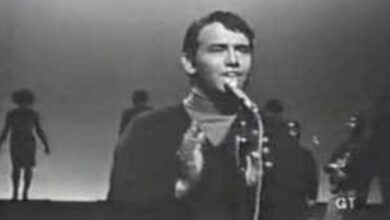
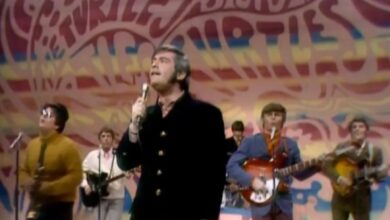
A classic TV performance from the era shows something else: how confidently The Searchers could deliver this song when it was still “new” to much of the world. The live-TV environment adds a different kind of intensity—no room to hide, no endless retakes, just the band standing there with the spotlight on their timing and blend. You can feel how the British Invasion wasn’t only about good songs; it was about presentation, tightness, and the ability to look composed while playing with snap. “Needles and Pins” benefits from that composure because the lyric is about trying to keep yourself together. The performance becomes a little piece of theater: bright sound, controlled faces, and heartbreak hiding in plain sight.
Hearing Jackie DeShannon’s original after living with The Searchers’ version is a reminder that this song is fundamentally a piece of sharp songwriting, not merely a famous arrangement. DeShannon’s take brings out a more conversational vulnerability, with a distinctly early-’60s American pop sensibility—less jangle, more direct emotional confession. The lyric feels closer to the skin, as if the narrator is telling you what happened five minutes ago and still hasn’t caught their breath. When you compare that to The Searchers, you can hear what the British version “adds”: momentum, brightness, and a band-driven lift that almost dares the listener to sing along to something that hurts. Two valid emotional angles, one song sturdy enough to hold both.
The Smokie version decades later proves the song’s durability in a totally different era and style. Where The Searchers feel like a sprint—clean, bright, urgent—Smokie leans into a smoother, mid-to-late-’70s rock-pop feel that gives the lyric more space to ache. The production is bigger, the atmosphere is softer around the edges, and the vocal phrasing shifts the emotion from sharp sting to slow burn. That’s the mark of a real standard: it can be reinterpreted without breaking. “Needles and Pins” isn’t locked to one tempo or one guitar tone. It’s a lyric and melody combination strong enough to survive decades of changing taste, which is exactly why it keeps resurfacing whenever an artist wants a heartbreak song that doesn’t feel generic.
What makes The Searchers’ version “different,” and why it remains the reference point, is that it nails the paradox at the center of pop heartbreak: the catchier the tune, the more the pain spreads. Their jangle isn’t just pretty—it’s a delivery system. The chorus doesn’t just describe emotional injury—it invites a roomful of people to shout it together. That communal quality is why the song’s influence stretches far beyond its chart run. Artists across genres have borrowed that trick: pair a bright, almost uplifting musical surface with a lyric that’s quietly devastating, and you get something that lasts. The Searchers were early masters of that balance, and “Needles and Pins” is one of their cleanest demonstrations of it.
It also helps that the song captures a very specific emotional moment that never goes out of style: the instant you realize you’re not the main character in someone else’s love story. It’s not the end of love; it’s the humiliation of love continuing when it shouldn’t. That’s why the “needles” image still works. It’s not a single dramatic wound. It’s the repeated poke of memory, the constant reminder you can’t unsee. When people call the track timeless, this is what they mean: the scenario is evergreen, and the lyric is plainspoken enough to feel real in any decade. Add The Searchers’ bright propulsion, and the song becomes heartbreak you can dance to.
Finally, “Needles and Pins” matters because it shows how a band can become iconic without relying on volume or spectacle. The Searchers didn’t need distortion or dramatic slow builds to make this hit feel intense. They used clarity, speed, and elegance—musical qualities that can carry emotion just as sharply as heaviness can. In the bigger picture of 1960s pop, this record is a bridge between eras: rooted in early-’60s songwriting craft, but performed with the lean, modern band energy that would dominate rock and pop for years. That’s why it still echoes. It isn’t only a nostalgic artifact. It’s a blueprint for how to make pain feel immediate, melodic, and impossible to forget.