Neil Diamond’s “I Am… I Said” Turned Personal Doubt Into One of the Most Powerful Ballads of the 1970s
“I Am… I Said” stands as one of Neil Diamond’s most emotionally exposed recordings, the kind of song that sounds less like a polished pop product and more like a man trying to make sense of himself in public. Released in 1971, it arrived at a moment when singer-songwriters were turning inward, writing with a new kind of confessional intensity, and Diamond answered that cultural shift with a record that felt unusually raw for an artist already known for grandeur. What makes it so gripping is that it never loses its melodic strength while carrying such heavy emotional weight. The song is reflective, lonely, proud, wounded, and strangely defiant all at once, which is exactly why it has endured for so long.
Unlike many heartbreak songs that circle around romance, “I Am… I Said” feels more existential than romantic. Its sadness is not just about a person missing someone else. It is about dislocation, identity, and the strange experience of not fully belonging anywhere, even in places that helped shape you. That is what makes the song hit differently from so many of Diamond’s other famous recordings. “Sweet Caroline” invites a crowd to sing together, but “I Am… I Said” feels like the late-night moment after the crowd has gone home and the lights are dim. It carries a restless inner monologue, turning personal uncertainty into something huge and orchestral without losing the ache at its center.
Part of the song’s power comes from how difficult it reportedly was for Diamond to write. This was not a casual burst of inspiration tossed off in an afternoon. It became one of those songs that seemed to demand something from him emotionally before it would finally reveal itself. That struggle is audible in the finished record. It does not move like an easy pop confection. It feels wrestled into existence. The melody has lift, but the lyric has weight, and that tension gives the song its unusual authority. When Diamond sings it, there is a sense that he is not simply performing a role. He is pushing through something unresolved, which makes the listener trust every line a little more.
The lyric’s references to New York and Los Angeles are especially important because they ground the song’s emotional crisis in two very real places rather than in abstraction. New York is memory, origin, identity, and noise. Los Angeles is ambition, reinvention, and distance. Diamond turns those cities into emotional symbols, and suddenly the song becomes larger than autobiography. It speaks to anyone who has ever moved forward in life only to realize that progress can come with a deep sense of split identity. You can build a new life and still feel haunted by the old one. You can leave a place without ever quite leaving it behind. That conflict gives the song a kind of literary richness that elevates it beyond ordinary adult contemporary drama.
Vocally, Diamond is in extraordinary form on this recording because he never over-sings the central pain. There is power in his delivery, but it is controlled power. He sounds like a man trying to hold himself together while saying things he cannot quite believe he is saying out loud. That is a difficult balance, and it is one of the reasons the track continues to resonate across generations. If he had pushed too hard, the song might have tipped into melodrama. If he had played it too cool, it might have lost its urgency. Instead, he finds exactly the right register, somewhere between confession and performance. The result is one of the defining vocals of his career, filled with presence, gravity, and a sense of genuine emotional risk.
The arrangement plays a huge role in making the song feel so monumental. It opens with room to breathe, then gradually builds around Diamond’s voice in a way that mirrors the lyric’s emotional escalation. Rather than burying the listener in too much orchestral decoration, the production gives each dramatic moment a clear shape. The instruments support the feeling of inner conflict without distracting from it. That is one reason the song has always sounded more substantial than a routine early-1970s pop hit. It understands scale. The emotion inside the lyric is big, so the record grows big around it, but the center never gets lost. Even at its most sweeping, the song remains intensely personal, which is a very hard balance for any production to achieve.
Commercial success helped make “I Am… I Said” one of Diamond’s signature recordings, but chart numbers alone do not explain its legacy. Plenty of big hits fade into period pieces. This one did not. It stayed alive because listeners recognized something enduring inside it. The song captures a very specific kind of adult loneliness that does not age out of relevance. Its emotional concerns are not limited to one decade’s trends, fashions, or studio style. If anything, the passage of time has made the song feel even more meaningful, because modern audiences often respond strongly to records that dare to sound sincere without apology. Diamond’s sincerity is the entire engine of the song, and it is exactly what gives the performance its staying power.
There is also something fascinating about how “I Am… I Said” sits within Neil Diamond’s broader image. He was often seen as a master of big, crowd-pleasing songs, someone who could fill an arena with hooks and command a room with charismatic force. This track reveals another side of him, one that is less about spectacle and more about vulnerability. It proves that behind the showman was a writer capable of turning private confusion into a public anthem. That duality is part of what makes the song so special. It has the scale of a major statement and the intimacy of a diary entry. Very few artists could merge those qualities as convincingly as Diamond did here, and that is why the song still feels singular.
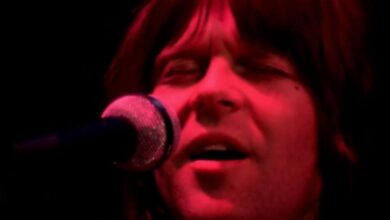
Hearing the song in a live setting adds a different kind of electricity because the vulnerability becomes more exposed. Onstage, there is nowhere for a lyric this personal to hide. Diamond has to stand inside it, and that creates a completely different drama from the studio version. The audience becomes part witness, part support system, responding not just to the melody but to the emotional release happening in real time. A strong live performance of “I Am… I Said” does not feel like a nostalgic revisit. It feels like the song is being rediscovered each time it is sung. That quality is rare. Some classics survive because they are familiar. This one survives because every return to it feels like another confrontation with the same unanswered questions.
The official studio presentation remains the emotional blueprint because it captures the song in its purest form, before decades of audience expectation and live mythology were layered onto it. There is something almost startling about going back to the original and hearing how focused it is. Every phrase seems carefully weighed. Every pause matters. The production does not try to soften the unease in the lyric. Instead, it frames it with clarity. That is why the song still feels so modern in one important sense: it trusts emotional directness. It does not wink at the listener or dress up its sadness in fashionable ambiguity. It simply states its condition and lets the force of that honesty do the work.
The Hot August Night era gives the song another layer of meaning because it places this deeply interior piece inside the grand scale of Neil Diamond’s live persona at full power. The contrast is thrilling. Here is a performer known for commanding huge audiences, and yet he can drop into a song so personal that the entire venue seems to shrink around him. That tension between arena-sized presentation and intimate emotional truth is one of Diamond’s great gifts as a performer. He knew how to make a crowd feel included in something private. In a song like “I Am… I Said,” that ability becomes especially potent, because the audience is not just hearing a hit. It feels like they are being allowed into a fragile, difficult thought process that never fully healed.
Later performances of the song are often moving for a different reason: age changes the meaning of the lyric. A younger Diamond sounds restless, still in the heat of searching. An older Diamond sounds reflective, as if he has lived with the questions long enough to know they may never be fully answered. That shift deepens the song rather than diminishing it. It becomes less about immediate identity crisis and more about the lifelong nature of self-reckoning. Great songs can absorb time like that. They do not stay frozen at the age they were written. They travel with the artist and gather new shades of meaning. “I Am… I Said” is particularly rich in that regard because its subject matter was never temporary to begin with.
What also keeps the song alive is the way it bridges different eras of songwriting. It belongs to the confessional spirit that defined much of the early 1970s, yet it still carries the dramatic melodic instincts of classic pop craftsmanship. That combination makes it especially satisfying. Some introspective songs from the period are lyrically strong but musically understated. Some grand pop songs are melodically memorable but emotionally broad. “I Am… I Said” gets both right. It gives the listener a lyric worth thinking about and a melody worth returning to. That is a powerful combination, and it helps explain why the song continues to be admired not just by longtime fans, but by listeners who come to Diamond through later rediscovery and musical hindsight.
In the end, “I Am… I Said” remains one of Neil Diamond’s greatest achievements because it transforms private uncertainty into something communal without ever diluting the pain that inspired it. It is a song about identity, movement, memory, and the loneliness that can survive even inside success. It does not offer neat resolution, and that is one of its strengths. The song stays with people because it leaves the emotional question open. Diamond did not package confusion into something easy. He sang it as confusion. That honesty, paired with one of the strongest melodies of his career, created a record that still feels enormous. More than fifty years later, it remains one of the most powerful examples of what happens when pop ambition and emotional truth meet at exactly the right moment.