The Groovy Evolution of “Sweet Pea”: Tommy Roe’s Bubblegum Masterpiece
When looking back at the mid-1960s, a period often dominated by the British Invasion and the rise of psychedelic rock, it is easy to overlook the sheer brilliance of the bubblegum pop movement. At the center of this movement was Tommy Roe, an artist who bridged the gap between the rockabilly energy of the early 1960s and the highly produced, hook-heavy pop of the decade’s end. One of the most significant milestones in his career arrived in 1966 with the release of a track called “Sweet Pea.” This song was more than just a catchy tune; it was a definitive pivot point for Roe, showcasing his ability to craft lyrics that were deceptively simple yet possessed a rhythmic complexity that made them impossible to forget.
The history of “Sweet Pea” is as charming as the melody itself. Interestingly, while the lyrics paint a picture of a young man falling for a girl at a dance, Tommy Roe has often shared in interviews that the title was actually inspired by his dog. This blend of personal whimsy and relatable teenage romance gave the song a unique sincerity. Released on ABC Records, the single managed to climb all the way to number eight on the Billboard Hot 100 in the United States and even reached the top spot on the Canadian charts. It was a massive comeback for Roe, who had spent a brief period away from the spotlight while serving in the Army, proving that his ear for a hit remained perfectly tuned.
What truly sets this track apart is its production. Managed by Gary S. Paxton, the recording utilized some of the finest session musicians of the era, known collectively as members of the Wrecking Crew. The arrangement features a driving, almost hypnotic drum beat and a bouncy bassline that creates a “lo-fi” feel decades before the term became a recognized genre. This specific rhythmic structure was so influential that it was later sampled by major hip-hop artists, most notably by MC Lyte and Gang Starr. The fact that a bubblegum pop hit from the sixties could find a second life in the golden age of rap speaks volumes about the timelessness of its fundamental groove.
The song’s structure is a masterclass in pop songwriting. It begins with the chorus, a bold choice that immediately grabs the listener’s attention and establishes the “Sweet Pea” hook as the central focus. Roe’s vocal delivery is light and airy, yet it carries a hint of the Southern charm that defined his earlier rock and roll hits. Unlike some of his contemporaries who leaned into the heavier sounds of the late sixties, Roe stayed true to the “feel-good” essence of pop. This commitment to joy is what made the song a staple on radio stations across the globe, from Australia to New Zealand, cementing Roe’s status as an international superstar.
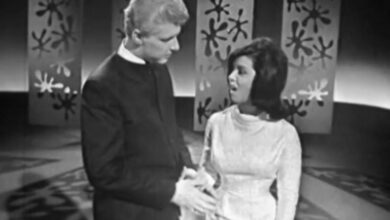
In the landscape of live music, “Sweet Pea” offered a different kind of energy. During the mid-sixties, performers were often expected to appear on television programs like “American Bandstand” or “Where the Action Is.” These performances were vital for maintaining a connection with a teenage audience that was increasingly distracted by new musical trends. When Roe performed the song live, the studio’s polished percussion often gave way to a more raw, immediate sound. Watching these vintage clips, one can see the genuine charisma Roe possessed—a clean-cut, approachable stage presence that contrasted with the more rebellious figures of the era but resonated deeply with fans of melodic pop.
Comparing the studio version of “Sweet Pea” to its various live iterations reveals a fascinating evolution of the song. In the original 1966 recording, the emphasis is on the crispness of the arrangement and the layering of the backing vocals. However, in later live performances from the 1980s and beyond, Roe often leaned into the rockabilly roots that first launched his career with “Sheila.” The tempo might be slightly adjusted, or the guitar work might take a more prominent role, but the core of the song—that infectious, repetitive “Sweet Pea, apple of my eye” refrain—never loses its power to get an audience moving.
The cultural impact of “Sweet Pea” also extends into the realm of film and television. Its upbeat nature makes it a perfect tool for directors looking to evoke a sense of 1960s nostalgia or to underscore a moment of innocent romance. Whether it is being played in a frenetic dance scene in an independent film or used as background atmosphere in a period drama, the song acts as a sonic time capsule. It represents a moment in music history where the goal was simply to provide “kicks,” as some critics have noted, delivering a three-minute escape into a world where the biggest problem was finding a way to ask a girl for a dance.
Today, Tommy Roe is remembered as an architect of the bubblegum genre, but “Sweet Pea” serves as evidence that his work was far more sophisticated than the label might suggest. He was a songwriter who understood the mechanics of a hit and a performer who could adapt to the changing tides of the music industry. As we look at the various versions of this classic, from the original vinyl pressings to the fan-captured live moments in small theaters, we see the legacy of an artist who never lost his touch. The song remains a testament to the power of a simple idea executed with professional precision and a whole lot of heart.
For those who want to experience the song exactly as it sounded when it first began its ascent up the world charts, the studio version remains the definitive starting point. The 1966 recording captures the perfect balance of Paxton’s innovative production and Roe’s youthful enthusiasm. It is here that you can clearly hear the drum break that would eventually catch the ears of hip-hop producers over twenty years later. The studio environment allowed for a level of vocal clarity that highlights Roe’s unique phrasing, making it easy to see why this particular version became a million-seller and a gold-certified hit.
As the decades passed, Tommy Roe continued to bring “Sweet Pea” to audiences around the world, often performing at venues that celebrated the legends of rock and roll. One particularly memorable live recording took place in 1988 at Little Darlin’s Rock ‘n’ Roll Palace in Florida. In this version, the song takes on a slightly more robust, live-band feel. The interaction between Roe and the audience is palpable, showing that the “Sweet Pea” magic hadn’t faded one bit. This performance is a great example of how a veteran artist can keep a classic fresh while still honoring the elements that made it a hit in the first place.
The influence of Roe’s signature style can also be seen when comparing his performances to other tracks from the same era that shared a similar “bubblegum” or pop-rock DNA. During the mid-to-late sixties, artists were constantly pushing the boundaries of what a pop song could be. By looking at high-energy performances from this period, one can appreciate the specific niche Roe carved out for himself. His music was less about the “wall of sound” and more about the “groove of the hook.” This distinction is what allowed “Sweet Pea” to stand out in a year that was packed with legendary releases from the Beatles, the Stones, and Motown.
Even in his later years, Tommy Roe’s dedication to his craft remained evident. In 2016, he was still taking the stage to deliver these hits with the same sincerity he had in 1966. These modern live recordings offer a poignant look at the longevity of a pop star. While the production values of the venues had changed, the fundamental appeal of the song remained the same. It is a reminder that a great melody doesn’t have an expiration date. For fans and music historians alike, these performances are a bridge to a different era, preserved through the lenses of fans who recognized they were witnessing a piece of living music history.
To wrap up the journey through the world of “Sweet Pea,” it is worth considering the song’s place in the broader narrative of Tommy Roe’s career. From the Buddy Holly-inspired “Sheila” to the dizzying key changes of “Dizzy,” Roe was a master of the pop format. “Sweet Pea” sits right in the middle of that trajectory, representing the moment he truly found his voice as a solo songwriter and producer. It is a song that invites you to smile, to tap your feet, and to appreciate the craft of a well-made pop record. It remains, quite literally, the apple of the eye for anyone who loves the bright, melodic side of the sixties.
Would you like me to find more information on Tommy Roe’s other hits like “Dizzy” or “Hooray for Hazel”?