Under the Umbrella of Everyday Life: How “Bus Stop” Turned Waiting Into One of Pop’s Most Human Love Stories
In the summer of 1966, a quietly observant pop song emerged from Britain and began traveling far beyond its point of origin. “Bus Stop” did not rely on grand drama or rebellious energy. Instead, it leaned into something far more human: the poetry of routine and coincidence. A rainy street, a shared umbrella, and time doing what it always does. The song felt immediate because it described something ordinary, yet it lingered because it understood how ordinary moments often shape the most meaningful connections.
The song was written by Graham Gouldman, who at the time was still remarkably young but already displaying an instinct for narrative songwriting. The idea reportedly came to him while riding public transport in Manchester, observing people waiting, arriving, leaving, and occasionally noticing one another. That sense of quiet observation became the backbone of the lyrics, which unfold like a short story rather than a traditional love song.
What makes the lyrics compelling is their patience. There is no rush toward romance, no exaggerated declarations. Instead, the story progresses through repetition and familiarity. Meetings recur. Seasons change. The bus stop becomes a fixed point while emotions evolve around it. This structure mirrors real life more closely than most pop songs of the era, which often compressed romance into a single dramatic moment rather than allowing it to grow gradually.
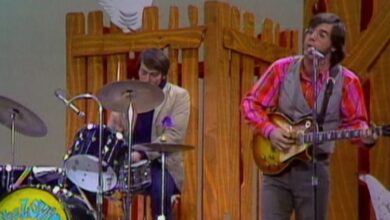
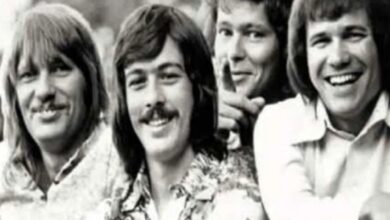
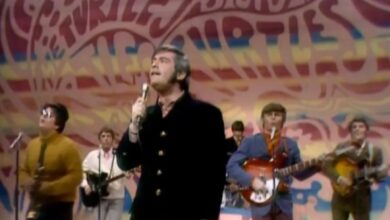
When The Hollies encountered the song, they immediately recognized its potential. By 1966, the band was already known for strong harmonies and melodic clarity, but “Bus Stop” offered them something slightly different. It allowed them to sound reflective without losing accessibility. The group’s ability to blend tight vocal harmonies with understated instrumentation made the story feel lived-in rather than theatrical.
The recording captured a balance that was difficult to achieve during the height of the British Invasion. While many contemporaries were leaning toward louder, more aggressive arrangements, The Hollies opted for restraint. The crisp guitar lines, steady rhythm, and layered vocals gave the song motion without urgency. It feels like walking rather than running, which suits a story centered on waiting and noticing.
Commercially, the song marked a turning point. It performed strongly in the UK, but its real significance lay in its international reception. “Bus Stop” became the band’s first major breakthrough in the United States, introducing American audiences to a more narrative-driven side of British pop. The success demonstrated that listeners were receptive not only to energy and novelty, but also to subtle storytelling wrapped in melody.
The lyrics resonate because they avoid idealization. Rain is inconvenient. Waiting is boring. Public transport is impersonal. Yet within those conditions, something meaningful emerges. The song suggests that love does not always arrive with fireworks; sometimes it grows quietly, shaped by shared routines and repeated encounters. That idea gave the song emotional longevity beyond its chart life.
Vocally, the performance is central to the song’s enduring appeal. The Hollies’ harmonies do not overpower the lead but surround it, reinforcing the sense of companionship that mirrors the narrative itself. There is a communal quality to the sound, as if multiple perspectives are observing the same unfolding relationship from different angles.
Musically, the track subtly reflects the era without being bound to it. There are faint hints of Eastern-influenced guitar textures that were becoming popular at the time, yet they are used sparingly. This keeps the song grounded in classic pop songwriting rather than experimental excess, allowing it to age more gracefully than many of its contemporaries.
For the band, “Bus Stop” represented artistic validation as much as commercial success. It proved they could interpret sophisticated material without sacrificing mainstream appeal. This balance became a defining aspect of their legacy, helping them remain relevant as musical trends shifted rapidly in the late 1960s.
For Gouldman, the song confirmed his instinct that everyday experiences could become powerful lyrical material. His ability to observe rather than exaggerate set him apart from many writers of the period. “Bus Stop” stands as an early example of how narrative pop could function as miniature storytelling, influencing later songwriters who sought depth without complexity.
Over time, the song became a cultural reference point for a particular kind of romance: understated, patient, and rooted in shared experience rather than fantasy. It evokes images of damp pavements, folded umbrellas, and glances exchanged between strangers who slowly become something more. These details give the song its cinematic quality without needing explicit drama.
The fact that the song has been covered and revisited by other artists speaks to its adaptability. Its structure is simple, but its emotional arc is universal. It can be reinterpreted across styles because the core idea — connection emerging from routine — remains timeless.
Decades after its release, “Bus Stop” continues to feel relevant because the world it describes still exists. People still wait. They still notice one another. They still find meaning in repeated, unremarkable moments. The song does not belong to a specific decade as much as it belongs to human behavior itself.
In retrospect, the lasting power of “Bus Stop” lies in its refusal to dramatize love beyond recognition. It respects the slow pace at which real relationships often form. By doing so, it captures something more enduring than a fleeting chart moment: a shared human truth rendered in melody.
Ultimately, “Bus Stop” stands as a reminder that pop music does not need spectacle to be memorable. Sometimes all it needs is a clear eye, a steady rhythm, and the honesty to say that life — even when it’s raining — has a way of surprising us when we least expect it.