Jan & Dean’s “Surf City” Turned California Dreaming Into A No. 1 Pop Event
Long before “California cool” became a permanent export, “Surf City” helped sell the fantasy in three irresistible minutes. Jan & Dean’s 1963 hit did more than celebrate boards, beaches, and sunshine. It bottled a whole youth culture at the exact moment America was ready to buy it. The opening line alone felt like a neon sign for endless summer, and from there the song never let up. What makes “Surf City” such a durable pop artifact is that it sounds breezy on the surface while being incredibly smart underneath. It is catchy, playful, and light on its feet, yet it also helped define an entire musical image of Southern California that would echo through surf music, hot rod records, teen movies, and pop radio for years afterward.
By the time “Surf City” arrived, Jan Berry and Dean Torrence were not unknown hopefuls stumbling into success. They had already built a reputation, first through vocal-group flavored records and then by pivoting sharply toward the youth-market energy surrounding surf culture in Southern California. What Jan & Dean did especially well was combine polish with personality. They were not as instinctively mythic as the Beach Boys would become, but they had wit, drive, and a producer’s ear for momentum. Jan Berry in particular was crucial to that sound. He was ambitious, technically curious, and deeply involved in arrangement and production, which gave Jan & Dean records a muscular, layered quality that often felt more sophisticated than their easygoing image suggested. “Surf City” became the clearest proof that behind the fun there was real craft at work.
The origin story of “Surf City” is one of the great intersections in early 1960s pop. Brian Wilson played a foundational role in the song’s creation, and the record emerged from a moment when California pop was still being invented in real time by young musicians feeding off one another’s ideas. That creative overlap is a big part of what makes the song historically important. “Surf City” sounds related to the Beach Boys because it comes from the same atmosphere, but it is not merely a hand-me-down or a lesser cousin. Jan & Dean transformed the material into their own statement, and the final result has a punch and exuberance that fits them perfectly. The collaboration also helped ignite one of pop history’s more famous family tensions, because Brian Wilson’s father reportedly disliked seeing such strong material become a Jan & Dean hit instead of a Beach Boys one.
What happened next gave “Surf City” a place in music history that goes beyond oldies-radio nostalgia. In July 1963, the single hit No. 1 on the U.S. pop chart, becoming the first surf song ever to top the national chart. That distinction matters because it turned a regional sound into a national phenomenon. Surf music had already been forming through instrumental guitar records, vocal harmonies, and West Coast imagery, but “Surf City” made the commercial power of that scene impossible to ignore. Suddenly the beach was not just a local setting or a movie backdrop. It was a pop destination. The song’s chart success also helped cement Jan & Dean as major players in a style that is sometimes remembered too narrowly through Beach Boys mythology alone. “Surf City” was a breakthrough moment not just for a duo, but for a whole aesthetic.
One reason the record connected so instantly is that it understands fantasy better than almost any teen-pop single of its era. “Two girls for every boy” is exaggerated, playful, and designed to stick immediately. That is precisely why it works. The lyric is less about realism than invitation. “Surf City” offers listeners a place where the weather is perfect, the romance is easy, and the fun never runs out. In the early 1960s, when youth culture was becoming a more dominant force in American entertainment, that promise was enormously powerful. The song did not just describe California. It sold California as a way of life. Even for listeners far from the coast, it made the beach feel within reach.
Musically, “Surf City” is far more carefully built than its effortless charm suggests. The hook lands instantly, but the arrangement keeps everything moving with confidence. The rhythm pushes forward without heaviness, the harmonies stay crisp without becoming overly sweet, and the production feels tight and intentional. There is no wasted space. Jan Berry’s studio instincts helped make the track feel bigger than its length. Everything is tuned for energy, brightness, and motion, giving the song a sense of forward drive that still feels fresh decades later.
The other thing that stands out is how naturally Jan & Dean deliver the performance. There is enthusiasm, but it never feels forced. They sound like they genuinely believe in the world they are describing, and that conviction carries through every line. That is why the song became so central to their identity. It was not just a hit. It defined their voice, their image, and their place in the surf music movement. In a crowded pop landscape, “Surf City” gave them something instantly recognizable.
There is also an interesting contrast between the carefree tone of the song and the seriousness behind its creation. Jan Berry approached production with precision and ambition, carefully shaping how the record would sound and feel. That balance between lighthearted content and focused execution gives the song its lasting strength. It sounds effortless, but it is built with intention. That combination is what allows it to remain more than just a nostalgic memory.
One of the most revealing ways to appreciate “Surf City” is through a live performance. On stage, the song becomes more communal. The audience already knows the words, already understands the feeling, and that shared connection becomes part of the experience. Even years after its release, the song retains its ability to bring people together, turning a simple pop track into something collective and energetic.
Listening again to the original studio version makes it clear why “Surf City” became such a massive hit. The structure is tight, the energy never drops, and the hook is immediate. It captures attention from the very first moment and holds it all the way through. Even without nostalgia, the song still delivers that same sense of excitement and clarity that made it stand out in 1963.
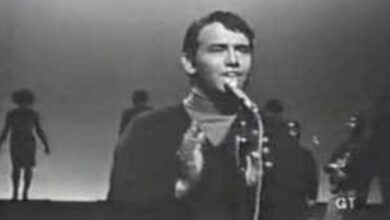
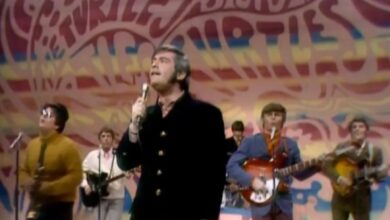
Seeing the song in a vintage television-style setting highlights how quickly it became part of popular culture. It was not just a track people listened to. It became something people associated with an entire lifestyle. The visuals, the movement, and the attitude all aligned with the sound, reinforcing its place in the cultural moment.
Comparing “Surf City” to other surf-era songs shows what makes it unique. While similar tracks captured the spirit of the coast, this one distilled it into something especially sharp and memorable. It does not just describe the scene. It defines it in a way that feels immediate and accessible.
Looking at Jan & Dean’s broader catalog, it becomes clear that “Surf City” was not a one-time success. It set the tone for a series of records that explored similar themes of youth, speed, and California life. That continuity helped solidify their place in the genre and proved that their success was built on more than a single hit.
What makes “Surf City” endure is how effortlessly it delivers joy. It creates a world that feels bright, open, and inviting, and it does so with remarkable efficiency. Even decades later, it still carries that same sense of movement and optimism.
More than just a chart-topping single, “Surf City” remains a defining piece of pop history. It captured a moment, shaped an identity, and left behind a sound that continues to echo. That is why it still matters, and why it still feels alive every time it plays.