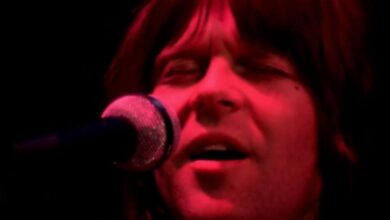
(I Can’t Get No) Satisfaction – The Rolling Stones
In the long, unruly history of rock and roll, very few songs feel like a permanent nerve ending. “(I Can’t Get No) Satisfaction” is one of them. It doesn’t belong to a single year, generation, or cultural moment anymore. It exists as a recurring emotional condition. Released in 1965, it captured a sense of irritation that went far beyond teenage angst, tapping into a broader feeling of being overwhelmed by noise, persuasion, and expectation. From the first second, it sounds impatient. The riff doesn’t ease you in—it interrupts you, like a thought you can’t shut off. That urgency is why the song still feels modern even decades later.
What makes “Satisfaction” so powerful is how deceptively simple it is. On paper, it’s a straightforward structure with a blunt chorus and a handful of verses. But emotionally, it’s loaded. The song isn’t about one problem; it’s about accumulation. Advertisements talking at you. Voices telling you what you should want. Social pressure closing in from every direction. Mick Jagger’s delivery isn’t melodramatic or poetic in a traditional sense—it’s conversational, almost annoyed, as if he’s thinking out loud and realizing mid-sentence that the world is exhausting him. That tone was radical in the mid-1960s, when pop music was still expected to be charming or reassuring.
The now-legendary guitar riff sits at the center of everything. Keith Richards didn’t craft it as a polished centerpiece meant to dominate history; it arrived almost accidentally, half-dreamed and recorded before it could disappear. That origin matters, because the riff sounds subconscious. It’s repetitive in a way that mimics intrusive thoughts, looping over and over without resolution. When paired with fuzz distortion—a sound still novel at the time—it created a sense of artificial aggression that perfectly matched the song’s critique of modern life. It wasn’t warm blues tone. It was sharp, mechanical, and slightly irritating by design.
At the time of its release, “Satisfaction” didn’t just succeed commercially—it shifted expectations. Rock music suddenly sounded confrontational in a new way. The song didn’t ask for approval. It didn’t try to be clever or virtuosic. It made its point and refused to soften it. That attitude helped define the public image of The Rolling Stones as something more dangerous and provocative than their peers. They weren’t selling romance or optimism. They were selling dissatisfaction itself—and audiences recognized something honest in that.
The lyrics were especially striking because they named everyday frustrations rather than grand political ideas. Jagger sings about commercials on the radio, empty promises, and the nagging sense that pleasure is always being dangled just out of reach. That focus made the song adaptable. As decades passed and technology changed, the targets evolved, but the feeling stayed the same. What once sounded like a complaint about 1960s consumer culture now feels eerily suited to algorithm-driven feeds, constant notifications, and curated desire. The song doesn’t need updating because it already described a loop that never ends.
Live performance is where “Satisfaction” truly became immortal. Unlike songs that depend on studio polish, this one thrives on chaos. It can be played fast or slow, tight or sloppy, snarled or shouted. The riff acts like a switch—once it’s flipped, the crowd is instantly locked in. Over the years, the Stones have stretched it, compressed it, joked with it, and weaponized it as an encore closer. Each version feels slightly different, but the emotional release is always the same. The audience isn’t just listening; they’re participating in a collective exhale.
As the band aged, the song took on new layers of irony. Watching musicians who became global icons sing about dissatisfaction adds complexity rather than contradiction. The lyric doesn’t lose power because success arrived; it gains perspective. The complaint no longer sounds like youthful frustration alone—it sounds like a lifelong awareness that fulfillment is temporary and desire regenerates endlessly. In that sense, “Satisfaction” becomes less of a protest and more of a diagnosis. It doesn’t promise escape. It simply names the condition honestly and loudly.
In modern concerts, especially those captured by fans, the song reveals its rawest form. Phone cameras flatten the visuals, distort the sound, and add the roar of the crowd directly into the mix. Yet the song survives all of it. Even through shaky footage and blown-out audio, the riff cuts through. That resilience proves something important: “Satisfaction” isn’t dependent on perfect conditions. It works because its core idea is strong enough to travel through noise, distance, and time without losing clarity.
Seeing the song through a fan’s lens emphasizes how communal it has become. Thousands of people move in sync, shouting a lyric that has outlived every context it was born into. In that moment, the song stops belonging to its creators alone. It becomes a ritual, something passed down rather than performed. No matter how many times it’s heard, the opening riff still triggers an instant reaction. That reflexive response is rare, and it’s one of the clearest signs of a true cultural landmark.
Returning to the original studio recording after a live version is almost shocking in its restraint. The track is lean, direct, and unsentimental. There’s no excess flourish, no extended solo, no attempt to overwhelm the listener. Everything serves the groove and the message. The fuzz guitar doesn’t scream; it insists. The rhythm section stays locked, pushing the song forward without distraction. It sounds confident but not indulgent, which is why it still feels contemporary. The recording doesn’t beg for attention—it assumes it.
Other artists have proven the song’s strength by reshaping it entirely without breaking it. When Otis Redding performed “Satisfaction,” he turned irritation into celebration. The structure loosened, the groove deepened, and the song transformed into a burst of soul energy. That version doesn’t contradict the Stones’ take—it reveals another emotional angle hidden inside the same framework. Frustration becomes movement. Complaint becomes release. The song absorbs the change effortlessly, which speaks to how solid its foundation really is.
Devo’s later reinterpretation took the song in the opposite direction, stripping it of warmth and replacing it with rigid, mechanical tension. Their version sounds deliberately uncomfortable, as if the music itself is trapped inside a malfunctioning system. Where the Stones sound annoyed by consumer culture, Devo sound consumed by it. The lyrics feel less sung than processed. This radical shift works precisely because the original song is conceptually strong enough to survive satire, distortion, and reinvention without losing its identity.
In the end, “(I Can’t Get No) Satisfaction” endures because it never pretended to solve anything. It doesn’t offer hope, closure, or enlightenment. It simply names a feeling and repeats it until it sticks. That honesty is why it keeps resurfacing in new eras, new formats, and new performances. The song doesn’t age because dissatisfaction doesn’t. It mutates, modernizes, and multiplies—but it never disappears. And as long as that remains true, the riff will keep returning, reminding each generation that the feeling they’re trying to escape has always been here, waiting for a voice loud enough to say it out loud.