Linda Ronstadt’s “Just One Look” And How A 1960s Soul Classic Found New Life In The Late 1970s
Linda Ronstadt’s relationship with Just One Look reveals far more than a simple cover choice; it reflects her instinctive ability to recognize songs with emotional architecture strong enough to carry multiple lives. By the late 1970s, Ronstadt had already built a reputation as an interpreter who could step inside a song and make it feel lived-in rather than performed. Just One Look offered her a perfect canvas: simple lyrics, direct emotional stakes, and a melody that allows phrasing and vocal dynamics to do the storytelling. What she brings to the song is confidence without arrogance — a performance that feels assured, grounded, and emotionally honest rather than theatrical or nostalgic.
Originally written and recorded in 1963 by Doris Troy, Just One Look emerged from the golden era of American rhythm and blues, where emotional clarity mattered more than production gloss. Troy’s original recording carried a raw immediacy — a young woman expressing certainty and vulnerability in the same breath. The brilliance of the composition lies in its restraint: it doesn’t over-explain, it simply states the emotional truth and lets the listener fill in the rest. This minimalism is precisely what allowed later artists to reinterpret the song without diluting its power.
By the time Ronstadt recorded her version for Living in the USA, she was operating at the height of her commercial and artistic influence. The late 1970s marked a period where she seamlessly bridged rock, country, pop, and soul traditions. Her take on Just One Look leans into that hybrid identity. The arrangement is brighter and more muscular than the original, driven by electric guitars and a steady rhythm section, yet it never overwhelms the song’s emotional center. Ronstadt’s vocal enters with confidence, but there’s restraint — she doesn’t oversing, she communicates.
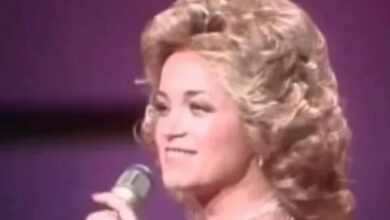
One of the most revealing ways to understand Ronstadt’s version is through her live performances, where the song becomes less polished and more urgent. On stage, Just One Look often gained a sharper edge, her voice pushing slightly harder against the beat, emphasizing longing and certainty at once. These live renditions show how she understood the song not as a museum piece, but as something alive and reactive to the moment. The audience response in these performances makes it clear that listeners weren’t just hearing a familiar tune — they were experiencing it anew through her delivery.
In contrast to Ronstadt’s approach, earlier pop adaptations such as the 1964 recording by The Hollies leaned into harmony and brightness, transforming the song into a jangly, upbeat anthem that fit neatly into the British Invasion sound. That version emphasized melodic clarity and group vocals, turning the song outward rather than inward. Ronstadt, however, pulls the focus back to the emotional interior of the lyrics. Even when the tempo feels energized, her phrasing suggests reflection rather than celebration, desire rather than triumph.
The studio version of Ronstadt’s Just One Look stands as a masterclass in controlled power. Her vocal never strains, yet it carries undeniable authority. Each line is delivered with precision, and the chorus lifts without becoming bombastic. This balance — between strength and vulnerability — is what separates her interpretation from many later covers. She doesn’t attempt to modernize the song artificially; instead, she lets the emotional truth remain intact while framing it with contemporary instrumentation suited to her era.
What makes Ronstadt’s performance endure decades later is not nostalgia, but emotional accessibility. The song doesn’t feel locked to a specific decade when she sings it. Instead, it feels timeless — a quality that few covers manage to achieve. Her voice communicates certainty without hardness and longing without desperation. That emotional equilibrium is rare, and it’s why listeners who encounter her version often feel as though it was written for her, even though it predates her career by more than a decade.
Looking back at Doris Troy’s original recording provides important context for Ronstadt’s restraint. Troy’s performance was intimate and unguarded, reflecting the emotional honesty of early 1960s soul. Ronstadt clearly respects that foundation, never overwhelming the song with vocal gymnastics or excessive production. Instead, she translates that honesty into her own musical language, allowing the song’s emotional structure to remain unchanged even as its sonic clothing evolves.
When comparing Just One Look across decades, it becomes clear that Ronstadt’s version functions as a bridge — connecting classic soul songwriting with modern rock-pop sensibilities. It introduces younger audiences to the song’s emotional DNA while honoring its origins. This bridging role was something Ronstadt excelled at throughout her career, often serving as a gateway for listeners to explore earlier musical traditions through her interpretations.
Her performances of Just One Look also highlight her stage presence: poised, direct, and emotionally transparent. She didn’t rely on spectacle or exaggerated gestures. The focus remained on the song and the voice delivering it. That simplicity gave the lyrics room to resonate and allowed audiences to project their own experiences onto the performance, strengthening the song’s emotional impact.
In the wider landscape of Ronstadt’s catalog, Just One Look may not always be the most discussed track, but it remains one of the most revealing. It encapsulates her artistic philosophy — respect the song, serve the emotion, and trust the listener. That approach ensured that her version didn’t replace earlier recordings, but rather joined them in an ongoing conversation across generations.
Ultimately, Just One Look endures because it captures a universal emotional moment with clarity and restraint. Ronstadt’s interpretation doesn’t seek to redefine the song; it seeks to inhabit it fully. By doing so, she ensures that the song continues to live, breathe, and resonate with listeners long after its original moment has passed.