Somewhere My Love (Lara’s Theme): How Andy Williams Turned A Film Melody Into A Timeless Standard
“Somewhere My Love (Lara’s Theme)” has one of those rare melodies that feels like it existed before anyone put a name to it—simple, aching, and instantly recognizable, even to people who couldn’t tell you where they first heard it. Its roots sit inside the sweeping romantic tragedy of Doctor Zhivago, where Maurice Jarre’s love theme drifts through snowbound landscapes like a warm memory refusing to freeze. But the pop world didn’t truly claim it until lyrics arrived and singers began treating it less like a piece of film scoring and more like a standard—something you could stand still and deliver straight into the room. That’s where Andy Williams comes in, because he didn’t just sing it. He gave it a face, a posture, and a kind of gentle inevitability that made the song feel like it belonged on radio as much as it belonged on a soundtrack.
The clever twist of “Somewhere My Love” is that it’s built on contrast: winter imagery pressed against springtime hope, distance pressed against devotion, and a melody that glides like a waltz while the lyric quietly admits the world isn’t cooperating. That tension is why the song keeps finding new listeners. The words don’t promise an easy ending—just the possibility of reunion, held up like a small light in a long season. It’s romantic without being syrupy, sentimental without collapsing into melodrama, and it uses nature as metaphor in a way that feels almost conversational. The song doesn’t beg; it waits. And in a musical era that could be full of big declarations, “Somewhere My Love” stands out for its restraint, like a confident voice that doesn’t need to raise volume to command attention.
Andy Williams’ version became a kind of masterclass in how to “carry” a melody without overpowering it. He understood that the hook isn’t a flashy vocal run; it’s the tune itself, the way it rises and falls like a slow breath. His tone stays polished, but not cold—warm enough to feel human, controlled enough to feel timeless. There’s also something unmistakably cinematic in how he shapes each line, as if he’s letting the orchestra do the scenery while he focuses on the emotional close-up. The best crooners knew when to step forward and when to let the arrangement speak, and Williams plays that balance beautifully here. It’s the sound of someone singing as if the song has already proven itself and doesn’t need to be sold.
Part of what makes this song such a cultural survivor is how quickly it crossed borders. The theme began in a film that was global in scale, then the lyric version spread through radio, easy-listening playlists, and living rooms where people might never have owned a soundtrack album. “Somewhere My Love” became a bridge between worlds: cinema and pop, orchestra and vocal, melancholy and comfort. In the mid-to-late 1960s, that kind of crossover mattered, because the musical landscape was splitting into louder, faster, more youth-coded directions. Yet this melody kept floating above the noise, and singers kept reaching for it because it offered something many songs didn’t: emotional clarity. It doesn’t pretend life is simple—it just insists that love can outlast the weather.
The lyric’s most memorable images are deceptively plain: snow covering the hope of spring, a hill blossoming in green and gold, a love that returns “warm as the wind, soft as the kiss of snow.” Those lines work because they’re tactile. You can feel them. Andy Williams leans into that tactile quality by singing as if he’s describing something he can almost touch but can’t quite hold yet. The result is a performance that feels like a letter written carefully enough to survive a long journey. Even when the arrangement swells, he never turns it into a power showcase. He keeps it intimate, which is exactly what the lyric needs—because the story isn’t about conquering distance with bravado, it’s about enduring distance with faith.
There’s also a quiet technical brilliance in how Williams phrases the song. He gives the melody room to land, letting notes finish their thought instead of cutting them short. That pacing makes the song feel like it’s moving through time, not racing against it. And because the piece began life as a film theme, it naturally wants to “travel” in long arcs—more like scenes than verses. Williams respects that architecture. He doesn’t chop it into pop urgency. He treats it like a standard you could sing at 25 or 75, and it would still fit the same emotional shape. That’s why the song feels strangely modern whenever it resurfaces: it isn’t locked to one era’s trends, because its structure was built for storytelling first.
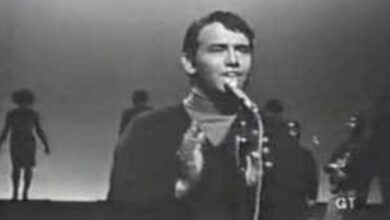
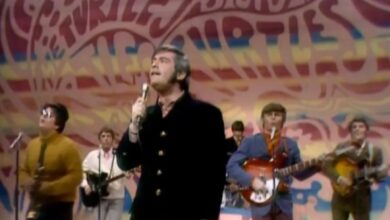
When the song is performed live, the difference becomes even clearer. In a studio recording, the sheen can make everything feel perfectly framed. Onstage, even in a controlled TV setting, the singer has to create the frame in real time—through breath, presence, and micro-choices of emphasis. “Somewhere My Love” rewards that kind of live attention because it leaves space for the performer to “color” the hope and the ache differently each time. The best versions don’t just sound pretty; they feel like someone living inside the lyric for three minutes. Andy Williams’ approach, especially in a performance setting, tends to make the song less of a soundtrack souvenir and more of a human moment—one person singing a promise into a room and trusting the melody to do the rest.
The real legacy of Williams’ take is how it taught audiences to hear “Lara’s Theme” as more than a piece of film music. He turned it into a pop standard without stripping away its cinematic soul. That’s a difficult trick. Many soundtrack-to-pop adaptations either lean too hard into the movie’s imagery or flatten the emotion into background music. Williams keeps the narrative heartbeat intact. He makes you feel the snow, but he also makes you believe in the spring. And because his vocal identity was built on clarity, warmth, and elegance, the song sits perfectly in his wheelhouse—romantic, reflective, and just dramatic enough to feel larger than life without ever becoming theatrical.
After hearing a live-style performance, the ear tends to notice how much of the song’s power comes from control rather than fireworks. The melody doesn’t need vocal gymnastics; it needs trust. What makes Williams such an effective messenger for this piece is that he sings it like a certainty, not like a plea. He doesn’t sound like he’s trying to convince anyone that love will return—he sounds like he’s already decided it will, even if the world is still covered in snow. In performance, that attitude matters because it changes the emotional temperature of the room. The song becomes less “sad” and more “steadfast.” And that steadiness is why it lands so well in the easy-listening canon: it comforts without denying the ache, and it offers hope without pretending hope is effortless.
The studio version carries a particular kind of glow—balanced orchestration, clean vocal capture, and that unmistakable 1960s polish that makes everything feel like it belongs in a softly lit room. But what’s fascinating is how the song’s origin still peeks through the pop finish. You can hear the film-score DNA in the way the arrangement supports long melodic lines, almost like it’s painting scenery behind the voice. Williams sits at the center, never crowded, never rushed. The performance feels designed for replay, the kind of track people could put on in the background and slowly realize they’ve stopped what they’re doing because the melody is pulling them in. That’s the signature of a standard: it doesn’t demand attention aggressively, it earns attention quietly. And in Williams’ hands, the song becomes not just a theme, but a mood—winter romance turned into a three-minute refuge.
To understand why Williams’ version feels “different,” it helps to compare it to choral interpretations like Ray Conniff’s, where the emotion arrives in a wider, more communal shape. A chorus can make “Somewhere My Love” feel like a shared longing—almost like a postcard from an era when romance was allowed to be grand and public. The harmonies give the melody a kind of shimmer, and the rhythm often feels slightly more buoyant, like hope is being carried by many voices at once. That approach is gorgeous, but it shifts the center of gravity. Williams keeps the song personal, like one person holding onto one memory. Conniff turns it panoramic, like a landscape shot. Both work, but the contrast reveals Williams’ quiet advantage: intimacy. He makes the listener feel addressed, not merely surrounded by sound.
Instrumental performances push the theme in another direction entirely, because without lyrics the melody has to do all the storytelling on its own. That’s where “Lara’s Theme” shows why it became so famous in the first place: it’s built to communicate emotion even when no one is explaining the emotion. Orchestral or concert interpretations can lean into the sweep, the grandeur, the sense of snowfields and destiny. The phrasing can become more dramatic, the crescendos more cinematic, the tempo more flexible. It’s often beautiful—sometimes overwhelmingly so. But it also highlights what Williams did that many purely instrumental versions can’t: he anchors the theme to language that feels human and immediate. The lyric turns the melody into a promise, not just a memory, and that promise is where Williams’ interpretation keeps finding its strength.
Another revealing comparison comes from Frank Sinatra’s approach, because Sinatra’s phrasing tends to play with time in a more conversational, streetwise way—less “polished postcard,” more lived-in confession. When Sinatra sings material like this, it often feels like he’s talking his way through the melody, bending the line to match the mood of the moment. That can make “Somewhere My Love” feel more adult, more weary, and sometimes more bittersweet. Williams, by contrast, keeps the edges smoother. He doesn’t sharpen the sadness; he softens it, almost like he’s protecting the hope inside the song. The difference isn’t about who’s “better.” It’s about emotional intent. Sinatra can make the theme feel like love remembered after hard miles. Williams makes it feel like love preserved carefully so it can survive the hard miles.
Choral studio versions also underline something else: the song’s melodic simplicity is deceptive. Because the line is so singable, it’s easy to underestimate how exposed it is. There’s nowhere to hide if the phrasing is clumsy or the emotion is forced. A chorus can mask individual vulnerability with blend, turning the melody into a velvet curtain of sound. That’s part of why choral takes can feel so “lush.” Williams’ solo version doesn’t have that protection. He’s out front with the lyric, and that exposure is exactly why his restraint reads as confident. He doesn’t crowd the melody with drama because he doesn’t have to. He lets the tune speak, then gently nudges key phrases—“Someday we’ll meet again,” “Lara my own”—so the song feels like a private vow spoken aloud by someone who means every word.
All of these comparisons circle back to the same point: Williams’ “Somewhere My Love” stands out because it keeps the song’s cinematic heart while delivering it with pop clarity. It doesn’t feel like a cover of a movie theme; it feels like a standard that just happens to have begun its life on a soundtrack. The best recordings in the easy-listening era did that kind of transformation—turning film, theater, or orchestral material into songs people carried through their own lives. And that’s why the piece still matters. It’s not only nostalgia. It’s craft. A melody built for storytelling, a lyric built for endurance, and a singer whose greatest skill was making emotional elegance feel effortless. In a world that often equates intensity with volume, “Somewhere My Love” remains a reminder that sometimes the most powerful thing a voice can do is stay calm and still tell the truth.