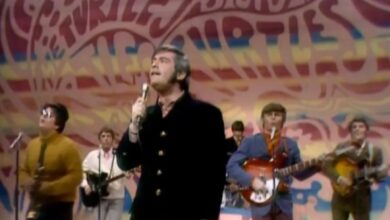
The Lovin’ Spoonful – Daydream (1966): The Sound Of A Perfect Afternoon
In early 1966, The Lovin’ Spoonful found themselves perfectly positioned between two musical worlds. Folk music was still echoing through coffeehouses and college campuses, while pop and rock were becoming more polished and commercially driven. Instead of choosing one direction, the band blended both, creating a sound that felt effortlessly natural. “Daydream” would become the clearest expression of that balance, capturing a relaxed mood that stood in quiet contrast to the increasingly intense tone of the decade.
The story of “Daydream” begins with John Sebastian, whose songwriting approach was rooted in observation rather than spectacle. Unlike many songs of the era that chased dramatic themes, Sebastian drew inspiration from something far simpler: the act of doing nothing. The feeling of lying back, letting thoughts drift, and enjoying a slow afternoon became the emotional core of the track. It was a small idea, but one that resonated deeply when translated into music.
Recording the song took place during a period of tight scheduling and constant movement. The band was balancing television appearances, touring commitments, and studio time, leaving little room for extended experimentation. Despite this, the sessions carried an energy that was both focused and spontaneous. Instead of overthinking every detail, they leaned into instinct, allowing the song to take shape naturally within the limited time they had.
At first, however, “Daydream” didn’t come together easily. The rhythm, which would later define the song, proved difficult to lock in. The guitar parts needed to feel loose yet precise, something that didn’t happen immediately. Frustration grew as the band struggled to capture the right groove, and for a time, the song was set aside. It was a reminder that even the simplest-sounding songs can be the hardest to perfect.
When the band returned to the track, everything began to fall into place. Rather than forcing a single perfect take, the production approach shifted. Different performances were combined, carefully pieced together to create a seamless rhythm. This subtle use of studio editing allowed the song to achieve a relaxed flow without losing its structure. It was an early example of how recording techniques could shape the final sound as much as the performance itself.
As the foundation solidified, additional elements were layered in to enhance the song’s personality. The piano added a playful bounce, weaving in and out of the melody without overpowering it. Meanwhile, the use of unconventional percussion—like spoons and light rhythmic accents—gave the track a distinctive texture. These details weren’t flashy, but they contributed to the song’s unique charm, making it instantly recognizable.
Vocally, Sebastian delivered the lyrics with an ease that felt almost conversational. There was no sense of urgency or strain in his voice. Instead, it sounded like someone casually sharing a thought, perfectly matching the laid-back theme of the song. This approach made the track feel approachable and genuine, as though it existed outside the pressure of performance.
Musically, “Daydream” avoided the dramatic rises and falls that defined many hit songs of the time. It didn’t build toward a powerful climax or rely on sudden shifts in energy. Instead, it maintained a steady, flowing rhythm from beginning to end. This consistency became one of its greatest strengths, allowing listeners to settle into the song rather than be pulled in different directions.
When the single was released in early 1966, it quickly stood out on the radio. While other songs were becoming louder, faster, or more complex, “Daydream” offered something refreshingly simple. Its melody was instantly memorable, and its mood felt like a breath of fresh air. Listeners connected with it not because it demanded attention, but because it created a space they wanted to stay in.
The song’s rise on the charts reflected that connection. It climbed steadily, becoming one of the band’s biggest hits and solidifying their place in the pop landscape. More importantly, it showed that there was still a place for songs that embraced subtlety and warmth. In an era of rapid change, “Daydream” reminded audiences of the power of simplicity.
Culturally, the track captured a moment that was easy to overlook. The mid-1960s are often remembered for their intensity and transformation, but “Daydream” represents the quieter side of that era. It reflects a time when not every song needed to carry a heavy message, when music could simply exist to make people feel good.
For The Lovin’ Spoonful, the success of “Daydream” marked a significant step forward. It demonstrated their ability to craft original material that resonated widely, moving beyond their earlier identity and establishing a sound that was uniquely their own. The song became a defining moment in their career, one that would influence everything that followed.
There’s also something timeless about the way “Daydream” was constructed. Its blend of folk influences, pop sensibility, and lighthearted experimentation created a sound that doesn’t feel tied to a specific moment. Even decades later, it remains as inviting as it was upon its release, a testament to how well it captured a universal feeling.
What makes the song particularly special is how unforced it feels. There’s no sense of trying to impress or innovate for the sake of attention. Every element serves the mood, and every choice feels natural. That authenticity is what allows it to endure, long after trends and styles have shifted.
Listening to “Daydream” today is like stepping into a slower, more reflective moment. It doesn’t rush, it doesn’t demand, and it doesn’t overwhelm. Instead, it invites the listener to pause, to breathe, and to simply enjoy the experience of being present.
In the end, “Daydream” is more than just a hit from 1966. It’s a reminder that sometimes the most powerful music comes from the simplest ideas. By capturing the feeling of an ordinary afternoon and turning it into something unforgettable, The Lovin’ Spoonful created a song that continues to resonate across generations.