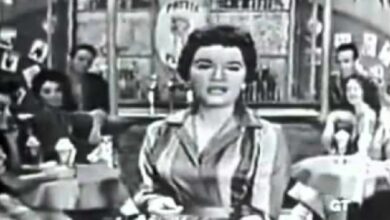
How The Searchers Turned “When You Walk in the Room” Into One of the Most Sparkling Gems of the British Invasion
The magic of “When You Walk in the Room” starts with a delicious little twist in pop history: the song most listeners instantly connect with The Searchers was actually written and first recorded by Jackie DeShannon. She released it in late 1963, and within a year The Searchers had turned it into one of the most sparkling records of the British Invasion, pushing it to No. 3 in the UK while giving the song a brighter, janglier, more guitar-driven identity that would echo through decades of guitar pop. That double life is part of what makes the track so fascinating. It belongs to American songwriting craft and Liverpool beat-group electricity at the same time, and that cross-Atlantic handoff is exactly where the song found its immortality.
What makes The Searchers’ version special is how quickly it announces its personality without ever sounding like it is trying too hard. This is not a performance that barges into the room; it glides in with a grin, a chiming guitar figure, and a buoyant rhythm section that makes infatuation sound both nervous and cool. The lyric is all about the physical shock of someone’s presence, that instant flutter when a particular person appears and suddenly your confidence collapses in the most glamorous way possible. The Searchers understood that the song did not need to be overplayed. They gave it shape, lift, and irresistible forward motion, then let the hook do the rest. The result is a record that feels breathless and polished at once, like a love-struck heartbeat dressed in its Sunday best.
By 1964, The Searchers were already a major force in the Merseybeat wave, riding high on hits and carving out a distinct space alongside the Beatles, Gerry and the Pacemakers, and the Hollies. But “When You Walk in the Room” showed something especially important about them: they were not merely a band that could chase a trend. They had an ear for songs that could be transformed through texture. Their arrangement leaned into the ringing 12-string guitar sound that became one of their signatures, and that sound helped give the track its elegant shimmer. It was romantic music with propulsion, sweet but never sleepy, polished but never stiff. That balance is why the recording still sounds so alive. It captures the moment when British pop was learning how to turn simple emotional ideas into records with real sonic personality.
There is also something quietly brilliant about how the record handles longing. Plenty of love songs from the era are content to tell you exactly what the singer feels in broad, declarative strokes. “When You Walk in the Room” works differently. It is built on physical sensation: the trembling, the frozen speech, the sudden loss of cool, the awareness that one person’s entrance can completely rearrange the emotional temperature. That is one reason the song has lasted so well. It captures not mature romance, not heartbreak, not devotion after the storm, but the dizzy, immediate chemistry of simple presence. The Searchers never weigh it down. They keep it airborne. In that sense, their version feels youthful in the best way: not naive, but fully committed to the thrilling absurdity of being knocked sideways by attraction.
The performance history of the song only deepens its charm, because “When You Walk in the Room” kept following The Searchers through decade after decade of live work. For many bands of their generation, the old hits eventually become relics, songs performed because audiences demand them rather than because the band still inhabits them. But with The Searchers, this one kept sounding natural in concert. That may be because the song’s architecture is so sturdy, or because the band’s vocal blend and crisp guitar attack remained such a good fit for it, or simply because some songs never really age out of live performance. When The Searchers brought it onto stages deep into the twenty-first century, it did not feel like an obligation. It felt like a handshake between eras.
That long road gives extra emotional weight to the song’s late-career appearances, especially in 2025, when The Searchers played what was billed as their farewell appearance at Glastonbury. The image alone is irresistible: a group born in the first great explosion of Liverpool pop stepping onto one of the world’s most famous festival stages for a final bow, carrying with them songs that had already survived six decades of shifting taste, formats, lineups, and music-industry upheaval. “When You Walk in the Room” in that setting is more than nostalgia. It becomes proof that some records are built from durable materials. Audiences are not only hearing a hit from 1964; they are hearing an entire tradition of melodic pop craftsmanship still standing upright, still smiling, and still able to win a room with two minutes of perfectly judged excitement.
The fun of revisiting the song now lies partly in hearing how influential that jangling Searchers style turned out to be. Long before countless later guitar bands made chiming strings and crisp hooks into a religion, The Searchers were already helping define the sound. Their reading of “When You Walk in the Room” has that bright, clean attack that would later feel prophetic. Yet it never loses its own period flavor. It is still proudly a 1964 pop single, compact and efficient, made to grab the listener quickly and leave a trace of excitement behind. The genius is that it does both jobs at once. It belongs to its moment completely, while also sounding like the blueprint for later generations who learned that romantic tension often lands hardest when wrapped inside sparkling guitars and immaculate group discipline.
And that is why this song keeps returning in different forms, from archival clips to latter-day concert footage to later covers that try their luck with its melody and mood. The song itself is strong enough to survive translation, but The Searchers’ version remains the one that feels most naturally airborne. Jackie DeShannon gave it the bones, but The Searchers gave it lift. They made it feel like the exact second when infatuation becomes visible on someone’s face. In journalistic terms, the story of “When You Walk in the Room” is really the story of how a great song met the exact right band at the exact right cultural moment and became something larger than either origin point on its own. That kind of collision is rare. When it happens, pop history tends to remember it forever.
A fan-shot performance is often the best place to understand whether an old song is merely famous or still genuinely alive, and that is exactly where “When You Walk in the Room” becomes so revealing. In an audience-recorded setting, the polish of television production disappears, and what remains is timing, confidence, and the chemistry between stage and crowd. That is the real test. With The Searchers, the song still flashes into focus almost immediately. The opening figure still does the heavy lifting. The chorus still lands with a smile. The audience response tells its own story: this is not reverence for a museum piece, but recognition of a pop song that still knows how to stir instant delight. The room does not need explanation. The song enters, and the atmosphere changes with it.
The official studio version remains the central miracle because it captures everything The Searchers did best in one tidy burst. There is no wasted motion. The guitars ring without turning brittle. The beat pushes forward without becoming aggressive. The vocal sounds eager without sounding desperate. It is a record that understands proportion, which is one of the hardest things to achieve in pop. Every element is vivid, but nothing is oversized. That economy is why the song travels so well through time. Heard now, it still feels fresh because it was never bloated in the first place. It knew exactly what kind of song it was, exactly how much shine it needed, and exactly when to get out before the feeling wore thin. That is pop craftsmanship at a very high level.
Hearing Jackie DeShannon’s original after The Searchers is one of the most rewarding comparisons in sixties pop because it reveals how songs evolve without losing their core emotional charge. DeShannon’s version has a different energy, a little more intimate and rooted in her own songwriting voice, and it makes perfect sense that British groups were drawn to her material. The Searchers had already scored with “Needles and Pins,” another DeShannon-associated song, and “When You Walk in the Room” offered them yet another ideal vehicle. What changed in the transfer was not the emotional premise, but the texture. DeShannon’s cut carries its own charm and authority, while The Searchers’ version adds jangle, group momentum, and a distinctly British beat-group sparkle that turned the song into one of their signature records. Both matter, but they illuminate different kinds of charisma.
A later live performance from The Searchers is useful for another reason: it shows how well the song wears age. Many sixties hits survive only as recordings of their youth, but “When You Walk in the Room” keeps its shape remarkably well in mature hands. That durability says a lot about the writing, but it also says a lot about The Searchers’ musicianship. Their best material was not dependent on youthful frenzy alone. It was built on clear melodic lines, smart harmonic movement, and arrangements sturdy enough to remain appealing long after the original chart run was over. In later performances, the song may lose a little of its original teenage velocity, but it gains another pleasure instead: the sight of artists carrying a classic tune with ease, as if it still fits naturally after a lifetime on the road.
A strong later cover such as Pam Tillis’s country hit proves that the song’s central engine is almost indestructible. Shift the style, change the era, move from Merseybeat shimmer to nineties country polish, and the song still works because the emotional premise is so immediate. Someone walks in, the heart stumbles, language fails, and the body tells the truth before the mouth can catch up. That is pop songwriting in its purest form. Yet even as later artists successfully reinterpret it, The Searchers’ version keeps an edge that is hard to duplicate. They hit the sweet spot between innocence and style, between beat-group snap and romantic flutter. That is why their recording remains the one that tends to define the song’s public memory. It is not just a hit version. It is the version where everything clicked.
In the end, “When You Walk in the Room” endures because it does something timeless with almost absurd efficiency. It takes one fleeting human experience, the split-second destabilization caused by another person’s presence, and turns it into a miniature pop event that still feels bright, charming, and emotionally legible more than sixty years later. The Searchers did not need grand statements or elaborate production to make that happen. They needed a great song, a signature guitar sound, a light touch, and the discipline to keep the whole thing dancing. That combination gave them a record that outlived trends, outlived fashions, and even outlived the active life of the band itself. When people talk about perfect pop singles from the British Invasion, this one belongs in the room immediately, and it has earned its place there.