Bruce Springsteen and the E Street Band Work Through an Audience Request
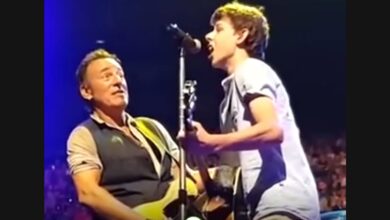
Bruce Springsteen’s Leipzig recording includes the E Street Band responding to an audience request for “You Never Can Tell.” The song takes shape during the clip.
Springsteen’s official recording identifies the concert as Leipzig on July 7, 2013. It preserves both the preparation and the performance.
The beginning shows the band working out an arrangement in front of the audience. The process is visible instead of being hidden before the song begins.
A familiar composition gives the musicians common ground. They can find recognizable melodic and rhythmic elements as the arrangement comes together.
The horn section contributes to that communication. A melodic cue helps point players toward the material, and their response lets listeners follow the process.
Watch the performance
Rhythm provides continuity as the details change. Once the pulse is established, the band has a foundation for the parts around it.
An audience request changes the relationship between the crowd and the show. The audience watches musicians respond to something outside the planned set sequence.
The request still creates practical musical demands. The players need to coordinate the song’s movement and recognize its sections while they perform.
Springsteen sings and helps guide the ensemble. Gestures and cues connect the musicians and make their coordination visible.
The song’s recurring patterns help the process remain understandable. Listeners can recognize an idea returning as the group settles into the arrangement.
Once the band shares a direction, the energy comes from the parts moving together. Vocal and instrumental responses begin to fit within one structure. The clip’s preparation is part of the performance’s value. Viewers see Springsteen communicate with the band and establish a workable direction before the song is fully underway. The horn section and rhythm players respond to cues, while the audience watches the process unfold. Because the request originates in the room, the musicians’ coordination becomes visible as well as audible. The finished song remains recognizable, but the recording preserves how the ensemble reached that shared arrangement.
The official clip preserves the full relationship. A short excerpt might show only a gesture or chorus, while the longer recording explains how the song develops.
Springsteen’s performance with Chuck Berry provides a relevant companion. It connects this cover with another live encounter involving Berry’s repertoire.
That comparison can focus on coordination. Different occasions and bands change the scale, while the familiar material remains recognizable.
The preparation deserves attention alongside the completed song. It shows listening and communication as parts of live musicianship. Once the common pulse is clear, the band can add details while keeping the song’s structure understandable to the crowd. This is a practical example of collaboration in a live setting. The request also gives the audience a different perspective on the set. The crowd is not only hearing a completed song; it is watching the musicians shape it in response. The official recording lets viewers hear this process in sequence, from the first cues to the completed performance, rather than only seeing the final result.
The Leipzig recording keeps the request connected to the music it produces. Springsteen and the E Street Band give the song a clear concert context.
More videos to explore
Rock & Roll Hall of Fame’s “Johnny B. Goode” with Chuck Berry and Bruce Springsteen offers another live performance connection.
Paul Simon, David Crosby and Graham Nash perform “Here Comes the Sun” in another concert recording that brings familiar material into a shared setting.
Further reading: Leipzig concert details and source video. Source video: https://www.youtube.com/watch?v=L-Ds-FXGGQg