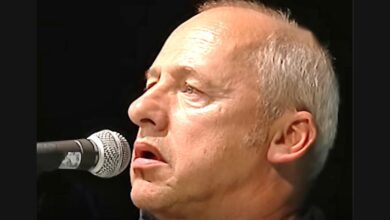
Dan Vasc Shapes ‘Amazing Grace’ as a Rock Ballad
Dan Vasc approaches ‘Amazing Grace’ with the vocal style of a dramatic rock ballad. The hymn’s melody stays recognizable while his delivery and the accompaniment develop in intensity.
The recording is available through Vasc’s own YouTube channel and Bandcamp page. These artist sources identify the performance directly and let listeners hear the arrangement in context.
The arrangement’s central idea is to preserve the familiar melody while changing its musical scale. A hymn often heard in quieter settings becomes the basis for a carefully shaped vocal build.
Contrast is important to that progression. Earlier passages create room for later sections, so the stronger singing sounds like an expansion of the same interpretation.
Vasc’s sustained tone carries the melody as the accompaniment grows. The voice remains clear within the broader sound, keeping the words present in the arrangement.
Watch the performance
Because the tune is familiar, phrasing and emphasis become easy to notice. Listeners can follow how the accompaniment changes the emotional setting without replacing the composition’s identity.
Rock ballads often develop toward a fuller release of energy. Applied here, that shape gives the recurring melody a sense of progression as its background changes.
The performance also depends on restraint at the beginning. Leaving space early allows later passages to register as a change in intensity rather than maintaining the same level throughout.
This is one interpretation of the hymn, not a judgment on other versions. Singers have approached ‘Amazing Grace’ in many settings, and this arrangement adds a rock-ballad frame.
Listeners may compare its dramatic build with Disturbed’s ‘The Sound of Silence.’ Both recordings recast familiar material through contrast, though they remain separate songs and performances.
Vasc’s interpretation centers on the hymn’s long vocal lines. The arrangement asks him to connect them clearly and let the stronger sections emerge as part of the musical progression.
The complete video provides more context than a short excerpt of the loudest moment. Hearing the opening and middle helps explain the direction of the closing section.
Vasc’s wider cover repertoire offers another context for his singing. Moving between rock material and a classical aria involves different approaches to resonance, phrasing and sustained notes.
Those skills matter here because the melody needs expression at different levels of intensity. Each phrase contributes to the movement between a reflective opening and a fuller sound.
The performance’s character lies in its musical shape as well as its vocal force. A recognizable melody, a gradual buildup and Vasc’s own sound combine in this arrangement.
For listeners exploring how covers can alter a song’s setting, this version offers a clear example. The hymn remains familiar as the performance takes on the scale of a rock ballad.
More videos to explore
Disturbed’s official ‘The Sound of Silence’ video gives a separate example of a dramatic arrangement of familiar material. Its sound and song provide a comparison with Vasc’s hymn performance.
Dan Vasc’s cover of Puccini’s ‘Nessun Dorma’ places his voice in a classical aria. It offers another setting in which to hear his handling of sustained vocal lines.
Further listening source: https://www.youtube.com/watch?v=89g9yMGFGlM