David Armand Mimes Queen’s ‘Don’t Stop Me Now’ on Fast and Loose
David Armand makes Queen’s “Don’t Stop Me Now” entertaining without singing a note. On “Fast and Loose,” he turns the recorded track into a series of physical jokes, showing how a familiar song can inspire a different kind of performance through movement and timing.
The game is introduced by Hugh Dennis, while Pippa Evans and Ruth Bratt try to identify the song from Armand’s actions. Viewers can hear the music, so they have an advantage over the guests. Their guesses and reactions become part of the scene.
Queen’s recording offers Armand plenty of images to work with. The song moves quickly and has an energetic character, and he translates that momentum into visible gestures. His choices are absurd but remain connected to the music the audience hears.
The routine requires more than remembering lyrics. Each gesture needs to arrive at the right moment and remain clear long enough for the audience to understand it. The quick pace makes the mime a tightly timed piece of live comedy.
Armand’s expressions are as important as his movements. A sudden change of face can mark a new image or make an exaggerated action easier to read. His earnest manner gives the gestures a purpose, creating contrast with the comic situations he portrays.
Watch the performance
Some of the humor comes from making a lyric or image literal. A phrase that passes quickly when sung can look unexpectedly strange when represented by a body. The routine draws attention to the playful imagery already present in the song.
The guests are solving a puzzle, so the mime has two jobs: amuse the audience and provide clues. A movement can work as a joke even when it does not help the guesses. That keeps the game lively instead of predictable.
The song’s momentum gives Armand little time to stop and explain a joke. He moves directly from one idea to the next, building a sequence that keeps viewers wondering how he will respond to the next musical phrase.
Watching the song through physical comedy can make familiar details newly noticeable. Listeners may focus on a lyric or change in the recording they usually pass over. The humor comes from affection for the song’s exuberant character, not from mocking it.
The studio audience adds a live response to the performance. Laughter marks when a gesture lands, while the contestants’ reactions add another element Armand cannot fully control. Performer, guests and audience take part in different ways at the same time.
The routine uses very little scenery. Armand relies on posture, movement and expression to create each changing image. That limitation encourages comic shorthand, where a small gesture can quickly suggest a larger situation.
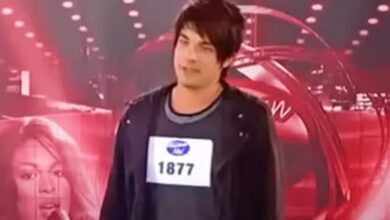
The source image shows Armand mid-action against the studio’s red curtains. It offers a preview of a performance whose meaning becomes clearer in motion. The gestures work in sequence with the track, so the full clip provides the best context.
A popular song can inspire more than another vocal cover. Mime and comedy reveal different aspects of the same recording, using the music as a structure for visual storytelling. Armand’s version keeps the original sound intact and adds a physical interpretation.
The fast pace makes the routine rewarding to watch again. Following the transitions shows how quickly Armand resets from one gesture to the next. The performance looks spontaneous, but the rhythm gives its many ideas a compact stage structure.
The BBC recording preserves the game-show setup as well as the mime. The contestants’ guesses help shape the routine and give Armand someone to perform toward. Recognition becomes one more comic beat in the sequence.
Queen’s song already celebrates forward motion, and Armand translates that feeling into physical comedy. His gestures are energetic and readable, turning a familiar track into a visual routine that invites viewers to watch with renewed curiosity.
More performances to enjoy
Armand gives Carly Simon’s “You’re So Vain” a similar literal treatment on “Fast and Loose.” Its different pace lets the humor develop through smaller gestures and carefully timed changes of expression.
His mime to The Bangles’ “Eternal Flame” turns another familiar song into a guessing game. The BBC clip offers a comparison between the ballad’s sustained emotion and Armand’s visual interpretation.