Jeff Lynne, Dhani Harrison, and Joe Walsh Share a Gentle Tribute Through Something
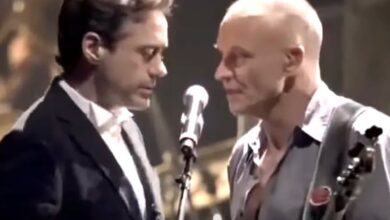
Jeff Lynne, Dhani Harrison, and Joe Walsh bring their different musical identities to a shared performance of George Harrison’s Something. Paul McCartney and Ringo Starr watch from the audience, adding another connection to the song’s history. The tribute develops through the voices and guitar on stage, with familiar material becoming the focus of an encounter between musicians and listeners who have particular relationships with its writer.
The performance’s personal context is evident before the arrangement has fully unfolded. The people involved help explain why this song belongs to the occasion, while the music gives that context an audible form. Something provides a recognizable melody through which they can work together, allowing the tribute to take shape as a live interpretation. Its meaning comes partly from the relationships around the composition and partly from how the musicians choose to carry it.
Dhani’s connection is familial, while Lynne brings the history of a friend, collaborator, and Traveling Wilburys bandmate. Walsh contributes another musical perspective through his guitar playing. Those different roles make the ensemble more than a set of names attached to the same song. Each brings a particular sound and relationship to the performance, giving the familiar writing an individual frame without needing to interrupt it with explanation. Hearing the contributors as an ensemble is useful because the tribute depends on their relationships within the arrangement as much as their separate histories. The voices share a line, the guitar connects the passages, and the performance gives those different connections a common musical direction.
A relaxed pace gives the melody room to settle. The arrangement allows changes of emphasis to emerge through phrasing, keeping the musical movement connected rather than constantly pressing toward a larger effect. That restraint makes the song’s familiar contours easy to hear, with the shared voices and instrumental responses supplying detail inside them. The performance’s scale is shaped by what the musicians leave open as well as by the sounds they add.
Dhani’s voice inevitably brings his father to mind for some listeners, but his role remains that of a musician singing the song in the present. Tone and phrasing offer points of connection without needing to be treated as imitation. The performance allows that resemblance to remain part of the occasion while attention stays on the actual line being sung, giving the family relationship a musical expression through his own participation.
Watch the performance
Lynne’s vocal presence adds another color to the blend. His steadiness helps keep the melody centered as the voices meet, contributing to the arrangement rather than standing apart as a separate feature. Knowing his history with Harrison adds context, but the musical relationship is also there to hear directly. Shared phrasing and a common pace allow the singers to give the song continuity, with harmony carrying part of the tribute’s warmth.
Walsh treats the guitar as another melodic voice within that frame. Its sustained tones and carefully placed phrases continue the musical thought around the singing, giving the instrumental passages an expressive role of their own. The part retains a connection with the song’s recognizable identity while fitting this particular performance, allowing guitar and vocals to remain in conversation rather than pulling the listener toward unrelated directions. Listening around the sung lines makes that role particularly clear. A note can be allowed to ring, or a short phrase can lead toward the next vocal entrance, keeping the instrumental detail attached to the melody and to the measured pace the ensemble has established.
The wider occasion joins remembrance with a celebration of Harrison’s writing. Something is heard both as a song with its own emotional perspective and as a composition that connects people to the musician who created it. The recording preserves those layers together without requiring every reaction in the room to have the same meaning. The tribute’s personal context remains visible while the arrangement supplies a shared musical focus.
The performers keep the composition close to the center rather than building the occasion around a dramatic change of genre. Familiar melodic shapes make their individual contributions easier to follow, allowing attention to move toward tone, phrasing, and blend. The approach shows how another set of voices and instruments can give a known song a fresh live frame while remaining closely connected to its existing character.
Space is an important part of that frame. The arrangement leaves the melody clear and allows harmonies to register without competing for attention at every moment. Following the complete performance reveals how those choices create continuity, with one phrase preparing the next and the guitar entering as part of the same flow. The tribute develops through the relationship between the musicians rather than through a succession of isolated features.
Returning to the Beatles recording offers a useful comparison with the live version. The melody and harmonic movement remain the common material, while the particular voices and instrumental sound change the atmosphere around them. Hearing the two together keeps Harrison’s writing in view and makes the tribute’s choices more apparent, especially the way it preserves a gentle pace and gives individual phrases room within the ensemble.
Repeated listening brings the shared arrangement into sharper focus. A vocal blend may first register as a single sound, then reveal the separate qualities within it. The guitar likewise provides an expressive continuation between sung passages. Those connections help the tribute remain measured and coherent, with technique serving the line of the song rather than becoming an event disconnected from the surrounding music.
Harrison’s composition supplies the strongest point of continuity across those details. Its melody can remain recognizable in different settings, giving performers a framework in which to make individual choices. Here, the people involved add a particular reason for singing it, while the relationship between their voices and instruments turns that reason into a performance the audience can hear unfolding in real time.
Paul McCartney and Eric Clapton’s Something at the Concert for George offers another tribute through the same composition. Its arrangement and occasion provide a different context for the melody, making it a natural companion rather than an interchangeable version of the same event. Comparing the recordings brings the choices of each ensemble into view and shows how a song can support more than one form of musical remembrance.
McCartney and Starr’s presence in the audience adds another relationship within this recording. They hear a composition connected to a shared history, while the musicians on stage give it a current live shape. The camera can preserve that exchange, but the song remains the center of it. Voices, guitar, and listeners all meet through a piece of writing with a place in their musical lives.
The performance’s character comes from the way its elements fit together. Dhani’s voice, Lynne’s harmonies, Walsh’s guitar, and the measured pacing each contribute to a common frame. The personal background deepens the occasion, while the musical details give listeners something concrete to return to. Hearing the full song preserves that balance, allowing remembrance to emerge through an interpretation shaped by distinct musicians working with care inside the same familiar melody.
More performances to enjoy
McCartney and Clapton’s live Something from the Concert for George offers a direct companion through Harrison’s writing. Its changing vocal and instrumental textures give listeners another way to follow the composition, providing a useful comparison with the balance of voices and guitar in the Lynne, Dhani Harrison, and Walsh performance.
The 2004 Rock Hall performance of While My Guitar Gently Weeps brings Prince, Tom Petty, Steve Winwood, and fellow musicians together around another Harrison composition. Its larger shared instrumental frame changes the atmosphere, offering a contrasting tribute in which a different song becomes the meeting point for a group of individual performers.