The Turtles’ “Happy Together” And The Two-Minute Pop Masterpiece That Defined An Era
“Happy Together” is one of those rare pop records that feels smaller than life on paper and bigger than life in memory. Released in 1967, written by Garry Bonner and Alan Gordon, and recorded by the Turtles for White Whale Records, the song turned a California band with a flair for wit and vocal sparkle into owners of one of the most durable sing-alongs in American pop history. It was not a grand psychedelic suite or a heavy social statement. It was something much harder to achieve: a perfect burst of joy. In just over two minutes, it built a world so bright and emotionally complete that generations of listeners kept returning to it whenever they needed proof that pure pop craftsmanship could still feel like magic.
What made the record special from the beginning was the contrast at its center. The lyric imagines romantic certainty with almost impossible confidence, yet the arrangement keeps everything buoyant, quick, and slightly playful, as if daydream and reality are colliding in real time. The Turtles did not perform it with solemn reverence. They attacked it with clean harmonies, punchy rhythm, and that bright, almost mischievous energy that made so much mid-1960s pop feel as though it had been designed for radios, road trips, and sudden changes of mood. The result was a song that captured innocence without sounding weak, optimism without sounding corny, and longing without sounding defeated. That balancing act is why it still lands with such force decades later.
The backstory only adds to the legend. Bonner and Gordon, both associated with the Magicians before moving more seriously into songwriting, had a demo of “Happy Together” that reportedly failed to impress many people at first. Yet the Turtles heard something in it, and once they committed, they transformed it from a rough possibility into a cultural event. The recording sessions in January 1967 at Sunset Sound, under producer Joe Wissert, gave the song the polish and lift that helped it leap from promising composition to epoch-defining single. Chip Douglas, newly involved with the group at the time, played a key role in shaping the arrangement, helping create the record’s blend of sophistication and instant accessibility.
Commercially, the song did exactly what every label dreams about and almost no single truly manages. It climbed the charts, overtook the Beatles’ “Penny Lane” to hit No. 1 on the Billboard Hot 100 on March 25, 1967, and stayed there for three weeks. For the Turtles, it became their first and only U.S. chart-topper, which in some ways makes the record even more fascinating. Some bands have a signature hit that overshadows everything else because it is merely bigger. “Happy Together” overshadows a lot because it feels definitive, as if one recording captured the entire promise of a band, a season, and an era in a form so complete that very little could rival it afterward.
The endurance of the song is measurable as well as emotional. The single sold in enormous numbers over time, and its continued presence across decades shows that “Happy Together” never really stopped living in the culture. It survived not as a dusty oldies-radio relic but as a piece of active musical memory, reappearing through films, television, commercials, streaming playlists, and cover versions that continue to borrow its emotional architecture. Some songs age into nostalgia. This one somehow keeps regenerating youthfulness. Every generation hears it and seems to discover the same thing: happiness in pop music is not shallow when the craft is this sharp. It becomes a kind of resilience, a refusal to let delight go out of style.
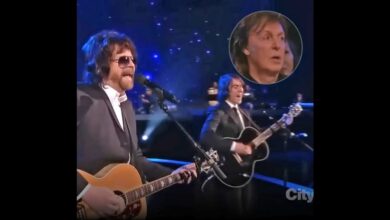
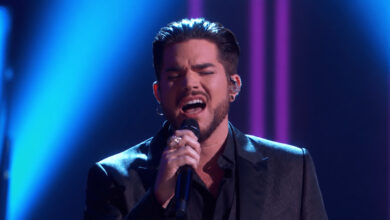
That is why live performances of “Happy Together” matter so much, especially later-era appearances by Flo & Eddie, the performing identity most audiences associate with Turtles veterans Howard Kaylan and Mark Volman. A fan-shot performance can reveal something that a famous studio version naturally hides: how a song changes when the myth has already been established and the singers are no longer chasing a hit, but preserving a shared memory. In that context, “Happy Together” becomes more than a song title. It becomes an agreement between stage and crowd. The audience does not just listen for melody. They wait for recognition, for the first line, for the point where the room realizes that a tune from 1967 still has the power to reorganize everyone’s mood in seconds.
The particular live clip that stands out most in this sequence is not important because it is louder or more virtuosic than the original. It matters because it shows what longevity looks like in pop. There is something moving about seeing “Happy Together” performed by artists who understand that they are carrying not only a catalog but an emotional inheritance. The delivery is relaxed yet committed, celebratory without becoming self-parody. What emerges is the song’s hidden strength: beneath its sweetness is a remarkably durable structure. Take away the original moment, the youth-market context, the chart battle, and even the exact lineup, and the song still works. That is the mark of a truly great composition rather than a merely fashionable one.
The official video and period footage tell a different but equally revealing story. In the visual world surrounding “Happy Together,” the Turtles look like a band standing at the intersection of polished pop professionalism and the more playful, freer spirit beginning to define the late 1960s. They were neither as aggressively rebellious as some contemporaries nor as tightly manufactured as others. Their charm came from a kind of wry approachability. That tone suits the song perfectly. “Happy Together” does not sound like a distant fantasy performed by untouchable stars. It sounds like ordinary human exhilaration raised to an art form. That may be the deepest reason the record has lasted: it is idealistic, but it never feels unreachable.
Seen in that live context, the song’s rhythmic snap becomes even more important. On record, it is easy to focus on the famous vocal hook and the euphoric lyrical premise, but a live performance reminds listeners that the tune is built on movement. It bounces. It steps forward. It never lingers too long over any one idea, which is part of why two minutes and change feels so abundant instead of slight. The audience senses that economy instinctively. There is no wasted gesture, no excess emotional explanation, no need to overstate anything. The song has already done the work. The performance simply reactivates a feeling people have known for years, and in doing so, it proves how expertly the original was built.
Hearing the original studio version again after a later live rendition sharpens the brilliance of the arrangement. The recording moves with absolute confidence, from its opening declaration to the layered rush of the chorus, sounding both spontaneous and meticulously constructed. There is also a fascinating emotional paradox in it. The lyric imagines perfect togetherness, but the musical performance is so urgent that it almost suggests the singer is racing to convince the universe to make the fantasy real. That tension gives the song its charge. It is not just cheerful; it is persuasive. The Turtles make joy sound like an act of will, and that subtle edge keeps the record from floating away into mere pleasantness.
One useful comparison point is the broader world of sunshine pop and adjacent 1960s harmony-driven hits. Listen to something like the Monkees’ “Daydream Believer,” and the shared appeal becomes obvious: a compact running time, a vocal approach that favors warmth over bombast, and a melodic structure designed to feel immediately communal. But “Happy Together” still stands apart because it compresses its emotional payoff more intensely. It wastes almost no time getting to the dream state, and once it reaches that state, it turns repetition into ecstasy. Similar songs from the period are lovable, but the Turtles’ classic has a slightly sharper spark, a more concentrated sense of lift, as if it knows exactly how much bliss the listener can handle before wanting to hit replay.
Another instructive neighbor is the brighter family-pop world represented by the Cowsills. Their best-known material carries that same open-hearted accessibility and generational ease, the sense that pop can be polished without losing its pulse. Yet “Happy Together” feels more distilled, more immediate, and slightly more surreal in its confidence. The Cowsills often project communal exuberance; the Turtles project intimate certainty scaled up to anthem level. That distinction matters. “Happy Together” feels like one person’s private romantic fantasy suddenly becoming everyone’s public celebration. Few records make that transition so seamlessly.
There is also value in comparing it with songs that bring a slightly different urban or rhythmic texture, such as the Lovin’ Spoonful’s “Summer in the City.” That track is brilliant in its own right, but it thrives on grit, atmosphere, and bustling scene-setting. “Happy Together” takes almost the opposite route. It removes clutter. It gives listeners not a cityscape, not a social portrait, but a perfectly lit emotional interior. The fantasy is the setting. The harmony is the architecture. The hook is the weather. That minimalist emotional world is one reason the song has traveled so well across decades and media. It does not depend heavily on context because it creates its own.
What also keeps the Turtles’ recording alive is that it captures a version of happiness modern pop rarely pursues in quite the same way. Contemporary songs often complicate joy with irony, trauma, or self-consciousness. “Happy Together” has no interest in apologizing for delight. It presents emotional clarity as thrilling rather than naive. That does not make it simplistic. It makes it brave in a different register. A song this openly enchanted can easily become cloying if the arrangement, performance, or pacing slips even a little. The Turtles never let it slip. Every harmonic turn, every rhythmic push, every vocal accent is aimed at preserving momentum, and that discipline is what allows the feeling to remain fresh rather than saccharine.
The longer one sits with the song’s legacy, the clearer it becomes that “Happy Together” is not just an old hit; it is a masterclass in compression. It tells no elaborate story, relies on no huge instrumental fireworks, and does not need a dramatic key change or oversized finale to make its point. Instead, it trusts the oldest and riskiest proposition in popular music: that a melody, sung with conviction and framed with precision, can change the temperature of a room. That trust paid off in 1967, and it continues to pay off now. Whether heard through remastered video, a fan-shot stage clip, or a neighboring classic from the same era, the song keeps proving that great pop is not about scale. It is about impact.
In the end, the record’s greatest trick may be how effortlessly it makes permanence feel light. So many canonical songs carry their importance heavily, almost demanding that listeners admire them for their innovation or historical weight. “Happy Together” never needs to insist on its status. It smiles its way into memory and stays there. That is a different kind of immortality, one built not on grandeur but on repeatable pleasure. The Turtles created a record that sounds as if it should vanish with the season, and instead it became perennial. More than half a century later, it still delivers the same promise with astonishing ease: for two minutes and fifteen seconds, the world can feel brighter, love can feel simple, and happiness can sound completely believable.