Dion’s “The Wanderer” Still Struts, Swings, And Hides A Darker Story Beneath The Swagger
“The Wanderer” remains one of the most instantly recognizable records of the early rock and roll era because it does something deceptively difficult. On the surface, it sounds loose, cocky, catchy, and almost impossible not to move to, but under that bright rhythmic confidence is a far more complicated portrait of masculinity, loneliness, and drift. Released in 1961 and associated with Dion’s Runaround Sue era, the song turned a Bronx-bred rock and roll singer into the voice of a roaming antihero whose cool exterior masked something sadder and more restless. That tension is exactly why the record has survived for so long. It is not just fun. It is fun with shadows in it, and that combination has given it unusual staying power across generations of listeners, performers, and critics.
Dion himself is a huge part of the song’s enduring force. Born Dion DiMucci in the Bronx in 1939, he emerged first with Dion and the Belmonts and then as a solo star, becoming one of the defining pre-British Invasion American rock and roll voices. What made him special was never simply that he had hits. It was the way he fused street-corner doo-wop instincts, New York attitude, rhythm and blues phrasing, and pop accessibility into a voice that sounded both polished and tough. “The Wanderer” may be the purest distillation of that blend. It has swagger, but not cartoon swagger. It has melodic sweetness, but not softness. It feels urban, mobile, and self-invented, which is one reason later generations kept returning to Dion as a blueprint for a very specific kind of American cool.
The song’s origin story is one of those wonderful pop-history twists that make a classic feel even more alive. Written by Ernie Maresca, “The Wanderer” was not initially destined to become one of Dion’s signature recordings at all. According to the song’s history, another act passed on it, and it ended up attached to “The Majestic” as a B-side after Dion’s previous smash “Runaround Sue.” Radio DJs, however, heard something stronger on the flip side and turned the record over, helping propel “The Wanderer” into a major hit. It climbed to No. 2 in the United States in early 1962, reached No. 10 in the United Kingdom, and hit No. 1 in Australia. That ascent tells a familiar rock and roll truth: sometimes the industry chooses one song, but the audience hears another destiny.
Musically, “The Wanderer” is built on an approach that sounds simple until you really sit inside it. The song is commonly described as drawing on a 12-bar blues-based verse with an eight-bar bridge, and that structure gives it a rolling, almost conversational confidence. Dion never sounds trapped by the groove. He rides it. The rhythm has bounce, the guitars keep the frame lean and sharp, and the backing vocal textures add just enough doo-wop flavor without softening the song’s self-mythologizing center. What makes the recording so durable is that it never overreaches. It does not try to be grand. It is compact, rhythmic, and sure of itself. That confidence became part of its cultural DNA, allowing the song to move easily from jukebox classic to canonized rock and roll statement. (Wikipedia)
Yet the song’s reputation would probably not be so rich if it were only a strutting character sketch. One of the most fascinating details in its history is Dion’s later insistence that “The Wanderer” is actually a sad song, even if many listeners first hear it as pure bravado. He described it as a record about going nowhere, and that reading changes everything. Suddenly the swagger becomes armor. The mobility becomes rootlessness. The iron-fisted confidence becomes a performance hiding emptiness. That is the secret engine of the song’s longevity. People can enjoy it as a cool rock and roll classic, but the deeper they go, the more they find a portrait of motion without purpose. That emotional undercurrent gives the track surprising psychological depth for a hit record from the early 1960s.
That hidden darkness also explains why “The Wanderer” never feels trapped in nostalgia. Plenty of old hits are beloved because they evoke an era. This one continues to matter because its core theme still makes sense in modern life. The self-styled drifter who moves from thrill to thrill, relationship to relationship, city to city, all while insisting he is free, remains one of popular culture’s most durable male archetypes. Dion’s version just happened to arrive early and in perfect form. Its economy is part of its genius. In just a few minutes, the song captures a whole identity and quietly questions whether that identity is liberation or self-loss. For a record that can still get a room dancing, that is a remarkably layered achievement, which helps explain why critics, artists, and institutions have continued to elevate it over time.
Its formal legacy confirms that status. “The Wanderer” was inducted into the Grammy Hall of Fame in 2017, a recognition that places it among recordings considered to have lasting qualitative or historical significance. Long before that, Dion had already been inducted into the Rock and Roll Hall of Fame in 1989, underscoring his role not just as a hitmaker but as one of the architects of early rock and roll identity. Those honors matter because they show the song was never treated as a disposable oldie. It became part of the story of the music itself. The reason is easy to hear: the song is compact but huge in attitude, local in accent but universal in theme, and catchy enough for radio while being rich enough to reward decades of reinterpretation and reflection.
Live performance adds another layer to the song’s history because “The Wanderer” is one of those records that can sound almost too perfectly preserved on the studio version until a stage performance reminds everyone how physical it really is. Dion’s live takes, especially the surviving vintage and later-career recordings, show that this was never just a studio artifact dressed in sharp production. It was a body song, a beat song, a song that works because a singer can step into it and turn a room into a moving chorus. That is also why the best versions feel slightly different from one another. A younger Dion sells the swagger with pure kinetic charm. An older Dion can shade the same song with hindsight, making the character sound less like a king of the street and more like a man who has lived long enough to understand the cost of constant motion.
Seeing a live Dion performance of “The Wanderer” changes the song in subtle but important ways. The stage version strips away some of the invulnerability listeners often project onto the record and replaces it with something more human. There is still bounce and bravado, but there is also a sense of a performer carrying his own history into the lyric. That is why live footage matters so much with artists like Dion. It reveals that the song was never just a frozen pose from 1961. It was a role he kept revisiting, testing, and reinterpreting. In performance, the crowd energy reinforces the song’s reputation as a singalong rock and roll classic, while the singer’s age and presence can deepen the undertow of regret and irony that was always lurking inside the words.
The original studio recording remains the benchmark because it captures the song before decades of interpretation accumulated around it. On the record, everything feels perfectly sized. The vocal is tough but melodic, the groove never drags, and the whole performance lands with the confidence of a hit that does not need to announce its greatness. That economy is one reason “The Wanderer” has outlived so many louder records from its era. It wastes nothing. The lyric gives just enough detail to sketch the character, and the arrangement gives just enough drive to make him believable. Listening to it now, it is easy to understand why radio turned to this side of the single. The record sounds like motion itself, but motion with a shadow behind it.
Putting “Runaround Sue” into the sequence helps illuminate what made Dion such a singular figure in the first place. “Runaround Sue” is more obviously playful and communal, driven by a teen-pop and doo-wop immediacy that practically invites group participation. “The Wanderer,” by contrast, feels more solitary and self-authored, even when it is just as catchy. Hearing the two songs near each other clarifies how quickly Dion was building a gallery of sharply drawn characters and urban emotional scenarios. He was not simply singing generic rock and roll hits. He was creating a whole attitude world. That is why “The Wanderer” stands out. It is not only memorable as a melody. It feels like a psychological cousin to “Runaround Sue,” darker and more inward even while sounding just as ready for the dance floor.
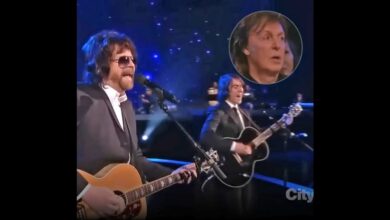
The song’s afterlife in cover versions proves how adaptable its framework is. A performance like the Bryan Adams and Dave Edmunds rendition from the late 1980s shows how naturally “The Wanderer” could move into a harder-edged rock context without losing its identity. That flexibility is one of the clearest signs of a strong composition. The song can survive stylistic changes because its backbone is so solid: the rhythm, the persona, the hook, and the tension between swagger and emptiness all remain intact. When later artists approach it, they are not just borrowing a catchy old tune. They are stepping into a myth. Some lean into the fun, others into the toughness, but the best versions preserve that crucial hint that the man at the center of the song might be performing freedom while quietly confessing a kind of spiritual drift.
Status Quo’s hit version from 1984 offers another useful comparison because it demonstrates how “The Wanderer” could be reshaped for a more overtly driving, pub-rock-friendly audience while still retaining the original’s core appeal. Their take had major chart success in the United Kingdom, which underscores how portable the song’s energy really was. Yet comparing that harder, more overtly muscular interpretation to Dion’s original also reveals what made the first version so special. Dion’s cut has more ambiguity in it. It swings with greater looseness. It feels closer to the street-corner, rhythm and blues, and doo-wop currents that helped form early rock and roll, whereas later versions often emphasize forward drive over inner contradiction. That is not a flaw in the covers. It just highlights how much nuance the original packed into such an apparently casual performance.
A later live performance of “Runaround Sue” also helps underline the remarkable durability of Dion as a performer. By the 2020s, he was no longer selling the image of youth in real time, yet the songs still worked because they were built on voice, rhythm, and character rather than a passing visual style. That is one of the most impressive things about Dion’s body of work. He was not merely a teenage idol who happened to score a few durable singles. He became an artist whose early hits could absorb time and come out with additional meaning. “The Wanderer” benefits from that especially well. The older Dion singing adjacent material only sharpens the song’s bittersweet undertone, because audiences now hear both the original swagger and the lifetime of reflection that followed it.
In the end, “The Wanderer” remains so compelling because it satisfies on multiple levels at once. It is a great rock and roll single, a perfect vehicle for Dion’s Bronx-bred charisma, a deceptively sophisticated character study, and a record whose emotional center deepens rather than fades as the years pass. Listeners can approach it as a fun old hit and still leave with the sense that something darker and wiser is unfolding beneath the beat. That layered quality is rare in any era, and it is especially impressive in a song this concise. More than sixty years after its release, “The Wanderer” still sounds like motion, pride, loneliness, and myth all packed into one lean, unforgettable performance.