Lee Marvin’s “Wand’rin’ Star” Became One Of The Most Unlikely Hits In Music History
Lee Marvin’s “Wand’rin’ Star” remains one of the strangest and most captivating hit records ever to emerge from a major Hollywood musical, because almost nothing about it should have worked as well as it did. It came out of Paint Your Wagon, a lavish 1969 western musical starring Marvin, Clint Eastwood, and Jean Seberg, a combination that already sounded unusual on paper. Yet what could have been remembered merely as an eccentric movie detour became something much bigger when Marvin’s gravel-deep performance turned “Wand’rin’ Star” into a genuine pop event. The song did not succeed because it was polished or conventionally pretty. It succeeded because it sounded weathered, lonely, and human, as if the voice itself had walked across dust, mud, and bad luck before ever reaching a microphone.
What makes the record so fascinating is the collision at its center. “Wand’rin’ Star” was written by Alan Jay Lerner and Frederick Loewe for the 1951 stage musical Paint Your Wagon, meaning its roots belonged to the golden age of Broadway craft rather than the rough-edged pop world it later entered. In the film adaptation, Marvin played Ben Rumson, a drifting prospector whose worldview is captured in lyrics about roaming, discomfort, and never quite belonging anywhere for long. The song is full of frontier imagery, but it also carries something deeper and sadder, a philosophy of motion as both freedom and curse. That tension is what gives the piece its depth. It sounds like a cowboy number on the surface, but underneath it is almost existential, which helps explain why it has lingered in public memory for so long.
A huge part of the song’s myth comes from the fact that Lee Marvin was not known as a singer at all. He was one of Hollywood’s great tough-screen presences, a man associated with grit, danger, and unsentimental force, not with musical finesse. According to the AFI Catalog, Marvin had never sung before taking on the role and received private “talk-singing” lessons, which in hindsight feels perfect for this material. A cleaner voice might have made “Wand’rin’ Star” merely respectable. Marvin’s voice made it unforgettable. He does not so much sing the song as inhabit it, delivering every line with the weary authority of someone who has stopped trying to impress anyone. That quality turned what could have been a novelty into something far more compelling, because the performance sounds inseparable from the character and from Marvin himself.
The film around it had a far more complicated life. Paint Your Wagon was a gigantic studio production with major stars, huge ambition, and a reputation for being a curious fit with its moment. Later accounts and film references consistently describe it as an expensive, awkwardly timed western musical released when audience tastes were shifting away from that kind of roadshow spectacle. But that is part of what makes “Wand’rin’ Star” so remarkable. The movie became divisive, yet the song escaped the film’s mixed reception and built its own identity. Listeners who may never have sat through the full picture still knew the record. That kind of separation is rare. Usually a soundtrack hit either lives and dies with its movie or remains tied to it forever. Marvin’s performance broke free and created its own legend.
Its chart story only deepened the legend. Official Charts records “Wand’rin’ Star” as a UK number one, and the song’s success became one of the great improbable singles stories of its era. Here was a deep-voiced actor from a western musical scoring a major hit in a pop landscape that was rapidly changing beneath everyone’s feet. The record’s strange authority may have helped it stand out. It did not sound like anything else around it. It moved heavily, spoke plainly, and leaned into its own oddity instead of trying to smooth it away. That distinctiveness gave it staying power. Even decades later, people do not remember it because it fit the mainstream perfectly. They remember it because it sounded like a ghostly outlier that somehow muscled its way into the center of public attention.
What also gives “Wand’rin’ Star” such a lasting pull is the lyric itself. It is full of hard, quotable lines that feel like frontier wisdom stripped of romance. The famous contrast between nature’s brutality and the deeper pain caused by people gives the song its emotional hinge. Mud, plains, snow, hell, heaven, goodbye, going, never settling anywhere for long: all of it builds a worldview that is both rugged and wounded. This is not the voice of a triumphant cowboy hero riding into the sunset. It is the voice of someone who knows wandering can become a fate. Marvin’s delivery makes those ideas feel even heavier. He turns the song into a kind of anti-ballad, where the beauty comes not from vocal shine but from the stark honesty of a man who sounds tired enough to mean every word.
The arrangement helps enormously. The performance is not elaborate in the showy sense, but it creates exactly the right atmosphere: broad, dusty, mournful, and strangely majestic. The song feels like a campfire confession enlarged to cinematic scale. It has the reach of a film musical, yet it never loses the inward, solitary mood that makes it so powerful. That balance is what separates it from many soundtrack songs that remain trapped inside their own productions. “Wand’rin’ Star” works as scene music, but it also works as a stand-alone mood piece. It can live on the radio, on a jukebox, or in the imagination without needing a plot recap to carry it. That self-sufficiency is a huge reason it survived when many more technically accomplished soundtrack vocals have faded from popular recall.
There is also a cultural afterlife to the song that makes it feel bigger than its original moment. Over the years it has been treated as both an oddball classic and a deeply moving one, referenced in later music discussions and remembered as the kind of performance only one person could have delivered in quite that way. Listeners still respond not despite Marvin’s limitations, but because of them. His voice turns the song into a piece of character acting set to music, and that gives it a texture many cleaner recordings never achieve. It is not a perfect voice. It is the right voice. In popular music, that difference matters more than people sometimes admit, and “Wand’rin’ Star” is one of the clearest examples of that truth. (Wikipedia)
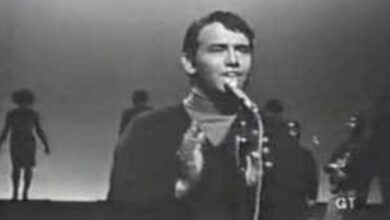
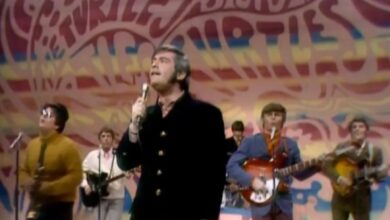
The Ed Sullivan performance is especially revealing because it shows how well the song could survive outside the film itself. On television, stripped from the vast machinery of a big-budget western musical, “Wand’rin’ Star” still carries enormous weight. Marvin’s presence does much of the work. He stands there looking less like a pop singer than a man who wandered in from another century, and that visual mismatch only strengthens the performance. Rather than trying to become slick for television, he leans into the song’s heaviness. That refusal to prettify the moment is exactly why it lands. The live presentation makes clear that the song was never only about orchestration or movie framing. It lived in the phrasing, the gravity, and the conviction of someone who sounded as though he had earned every scar in the lyric.
Returning to the soundtrack recording after hearing a live version only reinforces how unusual its achievement really is. In the studio version, everything is placed to support Marvin’s rumbling delivery rather than compete with it. The production gives him space, and that space matters because the voice itself is the spectacle. It is one of those rare recordings where technical roughness becomes a source of authority. In a more conventional musical setting, producers might have tried to correct, soften, or disguise those edges. Here, the edges are the point. They give the record its grain, its dust, and its sense of lived experience. That is why the original still sounds so distinct. It never chases beauty in the ordinary sense. It finds beauty in character, weather, and weight.
The film-scene version is valuable because it restores the full visual context that helped define the song’s first impact. Inside Paint Your Wagon, “Wand’rin’ Star” is not just an interlude but a statement of identity. It tells the audience who Ben Rumson is and what kind of world he occupies, but it also does something subtler by giving the grand western landscape an unexpectedly introspective heart. That combination of scale and loneliness is hard to pull off. The scene lets viewers feel how naturally the song fits into the dust-caked, rough-edged environment of the film, while also proving why it could outlive it. Even surrounded by costumes, mud, and frontier imagery, the song still reaches beyond the screen because its emotional center is so clear and so universal.
Hearing the official live audio release from the Sullivan performance adds another angle because it emphasizes just how little the song depends on visuals to create its atmosphere. The minute Marvin opens his mouth, the world of the song is already there. It feels old, windblown, and resigned in the best possible way. That is the genius of the performance. It does not require elaborate interpretation. It simply arrives carrying its own weather. The accompanying Yale Glee Club element on that performance also gives it a faint ceremonial grandeur, helping the song feel bigger without ever pulling focus from Marvin’s central, weathered tone. It remains an unusual mix of show-business presentation and frontier fatalism, which is a combination so peculiar and so effective that almost nobody else could have delivered it with the same authority.
Including Clint Eastwood’s “I Talk to the Trees” from the same film helps underline why “Wand’rin’ Star” stands so much taller in the public imagination. Eastwood’s performance has its own curiosity value, and the whole project remains fascinating because of how unlikely its casting was. But Marvin’s song became the defining artifact because it possessed something larger than novelty. It had emotional architecture. It could be quoted, remembered, and carried around in the mind long after the scene ended. Comparing the two songs throws Marvin’s achievement into even sharper relief. He did not simply survive an eccentric musical experiment. He dominated it with a performance so singular that it ended up becoming one of the film’s most enduring cultural footprints, far beyond the movie’s own mixed reputation.
One of the most appealing things about “Wand’rin’ Star” today is that it feels immune to polish. Modern listeners, surrounded by pitch correction, vocal smoothing, and endless studio refinements, often respond intensely to performances that sound undeniably human. Marvin’s version is not fragile, but it is exposed. You hear the grain in the voice, the limitations in the instrument, and the strange miracle of those limitations turning into style. That makes the record feel startlingly modern in an unexpected way. It anticipates the later appeal of singers whose voices are expressive because they are imperfect, not in spite of it. In that sense, “Wand’rin’ Star” almost feels ahead of its time. It values personality over prettiness, atmosphere over virtuosity, and truth over smoothness.
The song also lasts because it expresses a type of masculinity that feels more complex than the hard-man image often associated with Marvin’s screen persona. There is toughness in the performance, certainly, but there is also vulnerability, loneliness, and even a kind of doomed tenderness. The character does not brag about conquest or power. He talks about movement, pain, and the impossibility of home. That emotional openness gives the song much of its depth. It is not sentimental, yet it is deeply felt. That balance is difficult to achieve, especially in a western setting where songs can easily become either cartoonishly rugged or overly romantic. “Wand’rin’ Star” lands in a richer place, where wandering is both identity and burden.
Its endurance in the UK especially remains one of the great examples of how audiences sometimes embrace exactly the thing no committee would ever predict. A song from a western musical, sung by a famously non-musical actor in a voice often joked about for its roughness, somehow became a chart-conquering hit. That should have been impossible. Instead, it became inevitable once listeners connected with the mood. Records like this remind people that popular music is not always about technical superiority or market logic. Sometimes it is about voice as character, timing as accident, and emotion as atmosphere. “Wand’rin’ Star” brought all of that together in one unlikely package and, in doing so, became the sort of hit that remains memorable precisely because nobody could easily manufacture another one like it. (officialcharts.com)
In the end, “Wand’rin’ Star” is far more than a quirky soundtrack relic or a trivia-answer chart-topper. It is a genuine performance piece, a song that turns limitation into legend and strangeness into power. Lee Marvin did not sing it like a polished recording artist, and that is exactly why it still matters. He gave it dust, gravity, irony, and ache. He made it feel like the philosophy of a man who understood that movement can become destiny and that home can sometimes feel more painful than the road. Half a century later, the song still sounds singular. It still sounds like weather. And it still sounds like one of the most improbable hit records ever to wander into music history.