Last Train To Clarksville By The Monkees And The Urgency That Never Aged
There’s something unmistakably restless about a great live performance of “Last Train to Clarksville.” From the first beat, the song doesn’t invite you to settle in—it pulls you forward. In fan-shot concert footage, that momentum feels amplified, almost physical, as if the room itself is leaning toward the stage. What stands out immediately is how quickly recognition spreads through the crowd. The opening figure lands and people react instinctively, not thoughtfully, because this is a song wired into memory. It doesn’t behave like a nostalgia piece. It behaves like a situation unfolding in real time, a countdown disguised as pop music, and that quality is exactly why later performances still feel urgent rather than archival.
When the song first appeared in 1966, it arrived with unusual force for a debut single. This wasn’t a slow introduction or a cautious test of the waters—it was a full sprint straight to the top of the charts. At a time when radio was fiercely competitive, the track stood out because it wasted no time explaining itself. The guitars cut in immediately, the rhythm locks into place, and the vocal delivers its message with clarity and speed. What made it striking then, and what still does now, is how efficiently it blends brightness with tension. On the surface, it sounds cheerful and inviting. Underneath, it carries the weight of separation, uncertainty, and a goodbye that may not be temporary.
The lyrics are deceptively simple, which is part of their power. There’s no elaborate storytelling, no detailed backstory, just a request to meet before it’s too late. That lack of specificity allows the song to absorb meaning from whoever is listening. For some, it has always sounded like a military farewell. For others, it’s about leaving town, leaving youth, or leaving a relationship before words run out. The brilliance is that the song never confirms or denies any of those readings. It moves too quickly to dwell on explanation, trusting the listener to fill in the emotional gaps. That trust is one of the reasons the song has aged so well.
Context matters, too. The Monkees were introduced to the public as television characters before they were fully accepted as a real band, and “Last Train to Clarksville” played a major role in breaking down that skepticism. When the song took off, it did so on radio first, independent of the show’s visuals or humor. That success forced audiences to engage with the music on its own terms. A strong live performance today carries that same sense of validation. Every time the crowd sings along, it quietly reinforces the idea that this song has always belonged to the listeners, not to a concept or a format.
One of the most interesting aspects of hearing the song live decades later is how the vocal delivery changes its emotional temperature. The original recording captures youthful urgency, a voice racing against the clock. In later performances, that same melody carries additional layers—experience, hindsight, and a kind of reflective warmth. The lyrics don’t change, but the meaning deepens. What once sounded like a young man afraid of missing a train can sound, years later, like someone aware of how many trains life actually contains. That evolution gives modern performances a subtle emotional weight without altering the song’s structure.
Fan-shot videos are especially revealing in this case because they capture the exchange between band and audience without mediation. You hear laughter, cheers, imperfect singing, and moments where the crowd slightly outruns the tempo, driven by excitement. These imperfections don’t detract from the performance; they complete it. “Last Train to Clarksville” thrives on that kind of shared energy. It was never meant to be pristine or distant. It was built to move people, to make them feel like something is happening right now, and a room full of voices only strengthens that effect.
The song’s structure deserves special attention because it’s a lesson in pop songwriting discipline. There are no wasted sections, no indulgent detours. Each verse pushes the story forward, the chorus hits quickly and decisively, and the ending doesn’t linger. That tight construction is why the song works so well live. It leaves space for the audience to participate without losing momentum. Even listeners who don’t consciously know every lyric can sense where the song is going and follow along. That kind of intuitive design is rare and usually only becomes obvious when a song survives multiple generations of performance.
Comparing the live energy to the studio version highlights just how smart the original recording was. The studio take is crisp, controlled, and perfectly balanced, capturing the song at a moment when everything felt possible but uncertain. It freezes that feeling in time. Live versions, on the other hand, allow the song to breathe and absorb the years. Neither replaces the other. Instead, they form a conversation across decades—one preserving the urgency of the beginning, the other reflecting on how far that urgency has carried both the song and its listeners.
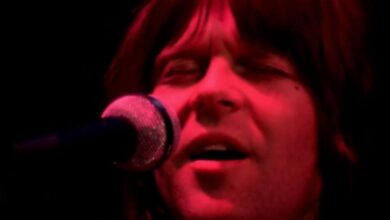
In this fan-recorded concert performance, what makes the moment special isn’t a dramatic rearrangement or surprise flourish. It’s the way the song instantly becomes communal. The crowd responds to every familiar turn as if it’s a shared reflex, and that response feeds back into the performance itself. The song no longer belongs to a single voice on stage. It belongs to the room. You can feel the difference in pacing, in emphasis, and in the way certain lines land harder because thousands of people are anticipating them together.
Returning to the original studio recording after hearing a live version is a reminder of how modern the song sounded even at the moment of its release. The production is clean without being sterile, energetic without being frantic. Everything is placed exactly where it needs to be. Hearing it now, it’s easy to understand why it cut through the noise of the mid-1960s so effectively. It doesn’t rely on novelty or studio tricks. It relies on clarity, melody, and emotional directness, qualities that rarely go out of style.
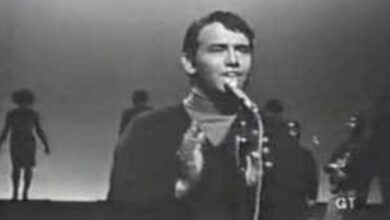
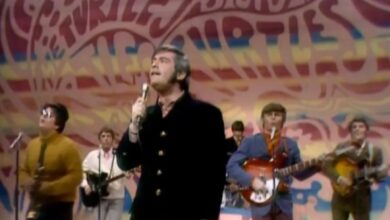
Early television performances show the song at the moment it became part of the cultural bloodstream. The presentation is polished, the movements choreographed, but the core energy is already there. Even in a controlled studio environment, the song refuses to sit still. Watching these performances now, you can see the early blueprint of how pop music would increasingly blend sound, image, and personality. Yet the song itself remains the anchor, strong enough to hold attention even when fashions and formats shift around it.
Later official live recordings occupy an interesting middle ground between raw fan footage and studio precision. The sound is clearer, the performances confident, and the interaction with the audience more relaxed. There’s a sense of comfort here, of musicians who know exactly what this song means to the people listening. The urgency is still present, but it’s paired with appreciation. The performance feels less like a race against time and more like a celebration of having arrived.
Instrumental and cover versions strip the song down to its essentials, revealing just how sturdy its foundation is. Without lyrics, the sense of motion still carries the piece forward. The melody alone suggests departure and anticipation. That’s a sign of strong songwriting. When a song can survive translation into different styles and still communicate its core emotion, it proves that its power isn’t tied to a specific era or voice.
Placing “Last Train to Clarksville” alongside other well-known songs from the same catalog highlights its unique position. While some tracks lean more toward reflection or warmth, this one is pure forward motion. It captures a moment where everything feels immediate and unresolved. That feeling hasn’t faded with time. If anything, it’s grown more resonant as listeners bring their own histories to it. The song continues to run, decades later, because it understands something fundamental about pop music and human emotion: sometimes the most lasting moments are the ones that never slow down.