Paul Anka’s “Diana”: The Teenage Plea That Launched a Global Pop Phenomenon
Paul Anka’s “Diana” is one of those lightning-bolt pop moments where you can hear a whole era pivot in real time. It arrived in 1957 with the breathless confidence of a teenager who didn’t yet know what he wasn’t supposed to attempt. The story starts with a young songwriter from Ottawa who understood, instinctively, that the teenage heart had become the new center of the pop universe. Rock and roll was still settling into its shape, and the charts were wide open for a voice that could sound innocent, urgent, and a little fearless all at once. “Diana” didn’t just introduce a hit; it introduced a persona—romantic, bold, and slightly desperate in the way only a young crush can be.
What makes “Diana” such a durable cultural artifact is how clearly it captures the emotional theater of adolescence without turning it into parody. The lyrics are simple on paper, but the delivery sells the stakes like they’re life-or-death. There’s pleading, pride, embarrassment, and determination packed into a tight runtime that wastes no motion. It’s the sound of a boy trying to speak like a man, and that tension is exactly why listeners believed him. The record doesn’t rely on complicated poetry; it relies on conviction. When that vocal hits the opening lines, you can practically see a dance floor forming—school gym lights, crepe paper, and a thousand private dramas unfolding at the same time.
The background to the song has its own mythic pull because it plays like a classic showbiz origin tale: a teenager writes a song, meets the right people in New York, and suddenly the world has his name. “Diana” is closely associated with Don Costa, who became central to shaping the record’s polish and drive. The arrangement walks a clever line—clean enough to sound professional, lively enough to feel youthful. That balance matters, because “Diana” needed to sound like it belonged on mainstream radio while still carrying the new electricity that made rock and roll feel dangerous to older ears. It’s not “raw” the way later rock would be raw; it’s sharpened, bright, and built to travel fast.
Listening now, the record’s structure feels almost like a blueprint for the teen-idol era that followed. There’s the immediate hook, the conversational lead vocal, the backing voices that underline the plea, and the rhythmic bounce that makes the track feel like it’s moving even when it’s emotionally stuck. It’s a two-and-a-half-minute sprint, and that compactness is part of the genius. The song gives you just enough detail to project your own story into it. You don’t need to know who Diana is to understand what she represents: the unreachable person who has your whole attention, the one you’re sure you can win over if you just choose the right words.
The cultural impact is hard to separate from timing. In the late 1950s, pop was rapidly reorganizing around youth identity, and “Diana” arrived with the kind of directness that made it easy to claim as your own. It became an international success and helped turn Paul Anka into a global teen star almost overnight. That matters because it shows how the business was shifting: the singer wasn’t just a voice, but a brand, a face, a fantasy, and a mirror for teenage listeners who rarely saw their feelings taken seriously. “Diana” treats teenage emotion as real emotion, not as something to be laughed at, and that respect is part of why it still lands.
There’s also a craftsmanship angle that doesn’t get enough credit. The record’s rhythmic feel is buoyant, but it’s controlled; the vocal is young, but it’s not sloppy. That combination is what lets the song age well. So many novelty-tinged teen records from the era can sound dated because they lean too hard on gimmick or slang. “Diana” avoids that trap by keeping its language plain and its melody strong. The hook is memorable without being cute. The backing vocals support rather than smother. Even the phrasing feels carefully chosen to maximize sincerity. You can hear why radio programmers trusted it and why listeners kept returning to it after the first rush faded.
A lot of the fascination comes from the “who was Diana?” question, because the song feels so specific even while remaining universal. Over the years, the story has been told in multiple ways, but the essential point remains: this was a real crush turned into a record that traveled far beyond its original context. That transformation—from private longing to public anthem—is the pop miracle at the heart of “Diana.” It’s also why later performances of the song can feel surprisingly emotional. When an older Anka sings it, he isn’t just revisiting a hit; he’s revisiting the moment his life changed, the moment his teenage voice became a global signal.
That’s why modern live performances of “Diana” can feel “different” in a way that’s more than tempo or arrangement. The lyrics don’t change, but the meaning does. In a later-era concert setting, the song becomes a time machine shared between performer and crowd. Audience members bring decades of memory; Anka brings decades of lived experience. The plea that once sounded like youthful certainty now carries a wink, a fondness, and sometimes a bittersweet edge. The vocal doesn’t need to be identical to the 1957 take to be compelling. In fact, the cracks and adaptations can be the point—proof that the song has survived real life and still keeps its emotional shape.
Once you’ve heard a contemporary live version, it’s fascinating to return to the original studio recording and notice how lean and purposeful it is. The production isn’t trying to sound huge; it’s trying to sound immediate. That immediacy is what made it radio-perfect in 1957 and what makes it feel charming now. The lead vocal sits right up front, as if the singer is speaking directly into your space. The backing voices and band feel like they’re there to keep the story moving, not to steal the spotlight. It’s a record built around a single emotional objective: convince Diana. Every musical choice serves that objective, and that unity is a big reason the track became an enduring calling card rather than a one-season fad.
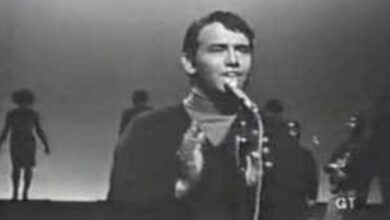
A great way to understand the song’s staying power is to hear it in a period performance context, when the record was still fresh and the teenage persona wasn’t yet a retrospective narrative. Television appearances from that era show how “Diana” worked not just as an audio hit but as a visual moment: the poised young singer, the controlled charm, the sense of a new kind of star stepping into the spotlight. In these performances, the song doesn’t feel like nostalgia—it feels like current events. The crowd reaction, the pacing, and the camera language all underline how big this felt at the time. It’s pop culture watching itself change, with “Diana” acting as both soundtrack and proof.
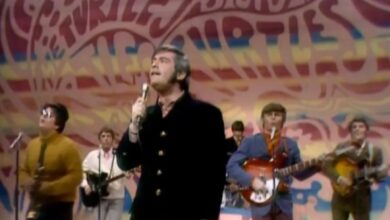
As the years moved on, “Diana” became something performers and audiences carried with them, which makes later live footage especially revealing. By 1960, for example, the song could already function as a guaranteed crowd-connector—familiar enough to trigger instant recognition, but still close enough to its initial wave to feel like a living hit rather than a museum piece. Performances from that period often highlight how the arrangement could flex without losing its identity. Tempo shifts, band dynamics, even slight changes in vocal approach all work because the core melody and emotional premise are so sturdy. When a song can survive those adjustments, it’s usually a sign you’re dealing with a classic.
What’s fun is that “Diana” also invites comparison with the broader tradition of artists revisiting their earliest breakthroughs later in life. Not every early hit survives that journey, because some songs rely too heavily on youth as a novelty. “Diana” survives because it’s rooted in a real feeling, and real feelings don’t expire. When Anka performs it decades later, the crowd often responds with a mix of celebration and tenderness, like they’re applauding both the song and the years it has traveled. The phrasing can become more relaxed, the delivery more conversational, and the charisma more seasoned. Instead of trying to recreate 1957, the performance can honor it—turning a teenage plea into a shared memory that still sings.
Another layer of the song’s legacy is how it helped set the stage for the modern singer-songwriter idea inside mainstream pop, even if the label didn’t exist in the same way then. A teenager writing his own material and turning it into a world hit sent a message: the author can be the star. That’s now a default assumption in many corners of pop, but in the 1950s it still felt like a story worth telling. “Diana” became a launching pad for a career that would stretch far beyond teen-idol status, but the song never stopped being a shorthand for the beginning. It’s the early chapter that audiences insist on hearing, partly because it’s catchy and partly because it symbolizes the instant where ambition met opportunity.
Musically, it’s also a snapshot of how pop and early rock negotiated with each other. The song carries rock-and-roll bounce, but it also respects pop clarity. The vocal is expressive without sliding into blues grit; the rhythm moves without becoming chaotic. That balance is why “Diana” could cross audiences and markets. It could play on stations that were cautious about rock’s reputation while still satisfying teenagers who wanted something newer than their parents’ playlists. In a way, “Diana” is a bridge record: it doesn’t sound like the 1940s, and it doesn’t sound like the mid-1960s either. It sits in that crucial in-between space where the future is obvious but not fully formed.
There’s also something quietly cinematic about the song’s emotional framing. It’s a direct address, almost like a scene from a teen film before teen films became their own genre. The singer narrates his longing straight to the person who holds the power, which gives the track a dramatic immediacy. That’s why it still works at weddings, oldies nights, and nostalgia-heavy playlists: it doesn’t rely on a specific trend or dance craze. It relies on the universal experience of wanting someone who might not want you back. The simplicity is the secret. A complicated lyric would have dated it. A simpler lyric makes it evergreen, because listeners supply their own details.
In modern listening culture, where songs constantly reappear through clips and re-shares, “Diana” has another advantage: it’s instantly identifiable. The melody announces itself quickly, and the emotional tone is clear from the first seconds. That makes it perfect for rediscovery. You don’t need to be a scholar of 1950s pop to understand why it mattered; you just need to hear how cleanly it communicates. And once you understand that, the song becomes a portal into the broader story of the late 1950s—teen stardom, television exposure, label machinery, and the global spread of American and Canadian pop through radio and touring.
What ultimately sets “Diana” apart from a lot of its era-mates is that it doesn’t feel like a time capsule sealed shut. It feels like a living object that keeps changing meaning depending on who hears it and when. For a teenager, it can sound like a genuine romantic manifesto. For an older listener, it can sound like the soundtrack to first love, first dances, first heartbreaks, and first independence. For a performer revisiting it later, it can feel like a handshake with the past—gratitude mixed with disbelief that the whole journey began with something so direct and heartfelt. That’s the pop magic: a small song, built on a simple plea, becoming bigger than the person who wrote it.