Shocking Blue’s “Venus”: The Swagger, The Groove, and the Song That Never Let Go
Shocking Blue’s “Venus” didn’t creep into popular culture—it arrived with confidence, attitude, and a riff that sounded instantly immortal. Released in 1969, the song felt both primal and futuristic, built on a hypnotic guitar figure that carried a sense of danger and allure from the very first second. At a time when rock music was splintering into psychedelia, blues, pop, and protest, “Venus” managed to cut across all of it with startling clarity. It wasn’t political, it wasn’t abstract, and it didn’t over-explain itself. Instead, it presented a mythic figure, wrapped her in groove and swagger, and let the listener do the rest. That simplicity—paired with absolute conviction—became the song’s secret weapon.
The band behind the record, Shocking Blue, came from the Netherlands, a fact that made the song’s eventual global dominance even more striking. European bands breaking through the American charts in the late 1960s was still far from guaranteed, yet “Venus” didn’t sound like an outsider trying to fit in. It sounded like it belonged everywhere. There was something universal in its pulse, something that felt older than radio but perfectly tuned to it. Shocking Blue weren’t chasing trends—they stumbled into something elemental, and the world responded almost immediately.
Much of that power came from the presence of Mariska Veres, whose voice gave “Venus” its unmistakable identity. She didn’t sing the song sweetly or softly; she delivered it with cool authority, teasing and commanding at the same time. Her vocal sits right in the pocket of the groove, never overreaching, never backing down. It’s the sound of someone who knows the song doesn’t need decoration. Veres’ performance turned a simple lyric into a statement of presence, and that presence is the reason listeners still stop when the record comes on, even decades later.
Songwriter Robbie van Leeuwen understood restraint just as well. The structure of “Venus” is remarkably economical: a riff, a groove, a chorus that hits exactly when it should, and no wasted motion in between. There’s a faint psychedelic haze in the organ lines and production, but nothing drifts. Everything serves momentum. That balance—between atmosphere and drive—is why the song feels so physical. You don’t just hear it; you feel it in your shoulders, your hips, your sense of timing. It’s a record that moves people without asking permission.
When “Venus” reached number one on the U.S. charts in early 1970, it marked a genuine milestone. Shocking Blue became the first Dutch band to top the Billboard Hot 100, but more importantly, they did it with a song that didn’t sound engineered for mass appeal. It was bold, slightly strange, and completely confident in itself. That achievement cemented “Venus” as more than a hit—it became a cultural marker, proof that pop music could be international, instinctive, and unapologetically stylish all at once.
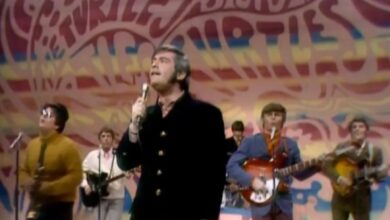
Live performances of “Venus” revealed another layer of its strength. Without studio polish, the song had to stand on groove and attitude alone—and it did. Onstage, the riff became sharper, the rhythm section heavier, and the vocal delivery even more daring. The song didn’t shrink in a live setting; it expanded. Audiences reacted not with polite nostalgia, but with physical engagement. Feet moved, heads nodded, and the chorus landed like a collective chant. That’s how you know a song is built right: it survives outside the studio and thrives on human energy.
What made certain live versions feel especially electric was how little the band tried to embellish them. “Venus” doesn’t reward overplaying. The best performances trust the space between the notes and let the groove do the talking. When Shocking Blue leaned into that philosophy, the song felt dangerous in the best way—tight, focused, and slightly untamed. It wasn’t about recreating the record perfectly; it was about proving the record was alive.
As years passed, “Venus” developed an unusually strong afterlife. Instead of fading into oldies rotation, it became a song artists wanted to challenge themselves against. That desire to reinterpret it speaks volumes about its construction. A weak song collapses under reinvention; a strong one invites it. “Venus” has always been the latter, offering a melodic and rhythmic skeleton sturdy enough to survive transformation without losing its soul.
That raw live energy explains why fan-shot and concert recordings of “Venus” continue to circulate with such enthusiasm. In these performances, you can hear the slight imperfections—the push and pull of tempo, the grit in the vocal, the room reacting in real time. Those details make the song feel immediate, as if it’s happening again rather than being replayed. The riff doesn’t sound preserved; it sounds present. That’s the difference between a song remembered and a song relived.
Returning to the original studio version after a live take feels like snapping a photograph into focus. Everything is precise, lean, and sharply defined. The groove is locked, the vocal perfectly balanced, and the chorus hits with machine-like confidence. This is the blueprint—three minutes of pop-rock architecture built to last. The fact that it still sounds fresh today says everything about the production choices. Nothing dates it. Nothing drags it down. It moves as efficiently now as it did when it first hit the airwaves.
The song’s most famous reinvention arrived in 1986, when Bananarama transformed “Venus” into a neon-bright dance-pop phenomenon. Their version traded swagger for speed, turning the groove into something explosive and club-ready. Yet even with that dramatic shift, the core of the song remained intact. The chorus still commanded attention, the melody still cut through, and the attitude still mattered. That kind of adaptability is rare, and it’s the clearest proof of how well the song was written in the first place.
Modern performances and covers continue to test “Venus” in new environments, from rock stages to pop showcases. Some lean into polish, others into grit, but the song always demands commitment. Half-hearted performances fall flat instantly. Confident ones soar. That makes “Venus” a kind of musical litmus test: it exposes hesitation and rewards boldness. Artists who understand that tend to unlock something special in it.
What ultimately makes “Venus” endure is not nostalgia, fashion, or even chart history—it’s attitude. The song knows exactly what it is and never apologizes for it. It doesn’t explain itself, soften its edges, or chase validation. It walks in, delivers its message, and leaves you humming whether you meant to or not. That confidence is contagious, and it’s why the song still feels alive whenever it’s played well.
More than fifty years after its release, “Venus” remains a reminder of what pop music can achieve at its best. With minimal ingredients and maximum conviction, Shocking Blue created something timeless. Each great live performance, each bold cover, and each new listener discovering it for the first time adds another layer to its story. It isn’t just a classic—it’s a living groove, still daring artists and audiences alike to keep up with it.